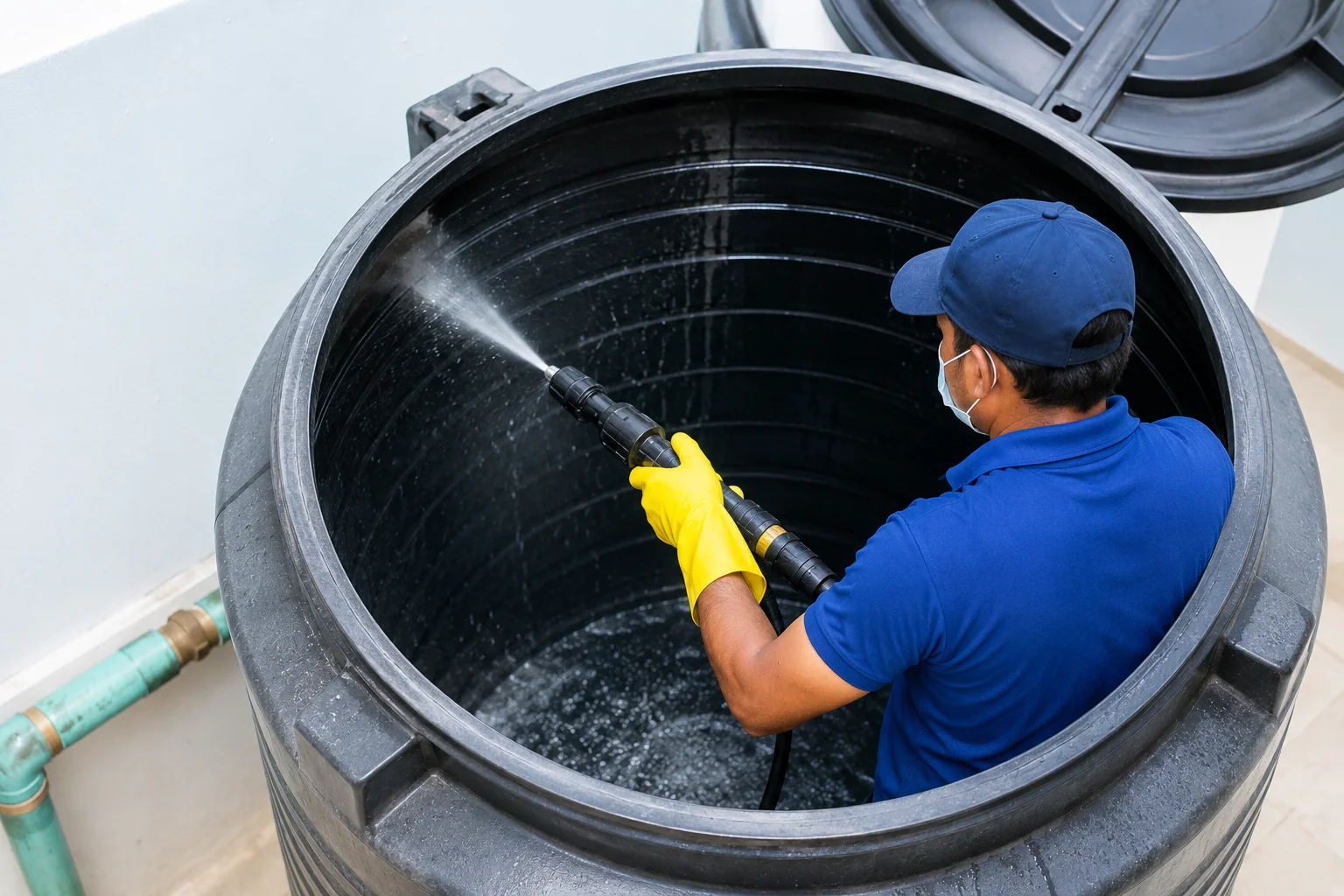
Overhead Water Tank Cleaning in Dubai for Sun-Baked Rooftop Tanks
The tank on your roof is the last stop before your taps. It sits in full sun, catches dust from every storm and is easy to forget because nobody goes up there. We clean it, disinfect it and seal it properly.
In short: Best Fix Prime provides overhead water tank cleaning in Dubai for rooftop and elevated tanks made of GRP, polyethylene and steel, on villas, townhouses and buildings. We drain the tank, clean the lid and vents, scrub away biofilm and algae, disinfect, rinse and refill, then make sure the lid seals and vents and overflows are screened. Call or WhatsApp +971 50 108 4133.
Overhead water tank cleaning in Dubai deals with tanks that work in some of the harshest conditions anywhere. Summer sun beats down on roof tanks all day, heating the water inside. Dust storms drive fine sand into any gap. Birds perch on tanks and nest nearby. Plastic tanks that let light through can grow algae. Lids warp in the heat and stop sealing. Because the water in a roof tank goes straight to your taps, its condition matters a great deal. This page explains what goes wrong in overhead tanks and how we clean them.
Which types of overhead tanks do we clean?
| Tank type | Where it is common | Typical issues |
|---|---|---|
| GRP sectional (panel) tank | Villas, buildings, larger roofs | Leaking panel joints, biofilm on panels, corroded bolts |
| Polyethylene (plastic) tank | Townhouses, smaller villas, annexes | Algae if translucent, brittle in sun, warped lids |
| Steel tank | Older villas and buildings | Rust inside and outside, flaking coatings |
| Elevated tank on a stand | Older properties and some compounds | Stand corrosion, difficult access |
| Linked multiple tanks | Larger villas and buildings | Uneven sediment, valves between tanks |
What does heat do to water in a roof tank?
Water in a roof tank can become very warm in summer, especially in dark or uninsulated tanks in direct sun. Warm water speeds up bacterial growth and biofilm formation on the tank walls. It also makes plastic tanks expand and contract every day, which stresses fittings and lids. Many households notice the effect directly, because the cold tap runs warm in the afternoon. Regular cleaning and disinfection keep the build-up under control, and shading or insulating the tank helps keep the water cooler.
Why does algae grow in some roof tanks?
Algae needs light and nutrients to grow. Plastic tanks that are thin, light-coloured or faded by the sun can let light through, especially when they are older. Combined with warm water and dust carrying nutrients, this allows green algae to grow on the walls. Algae gives water a green tint and an earthy taste or smell, and it provides a home for bacteria. Cleaning removes the algae, but if the tank lets light in, it will come back. Replacing the tank with an opaque one, or shading it, solves the problem for good.
How do we clean an overhead tank?
Reach the roof safely
Safe access to the roof and tank is set up, and the tank stand, lid and surroundings are checked.
Isolate and drain
The inlet is closed, the outlet used to drain the tank, and the remaining water and sediment removed.
Clean the lid and fittings
The underside of the lid, vents and overflow are cleaned, as dust and condensation collect there.
Scrub inside
Walls, floor and corners are scrubbed with tools suited to the tank material, removing biofilm and algae.
Disinfect and rinse
Every internal surface is disinfected, left for the contact time and rinsed.
Refill and seal
The tank is refilled, the float valve checked and the lid secured with screens fitted to vents and overflow.
The cleaning tools are matched to the tank material. GRP and plastic tanks are scrubbed firmly but without abrasives that could scratch the surface, because scratches give biofilm somewhere to grip. Steel tanks are checked for rust and coating damage. Panel joints in GRP tanks get extra attention, as sludge and biofilm collect along them.
Why is the underside of the lid so important?
The underside of a roof tank lid is easy to overlook, but it is one of the dirtiest parts of the tank. Dust that gets in settles there, condensation forms on it as the tank heats and cools, and that condensation drips back into the water carrying the dust with it. Insects and spiders often shelter there. Cleaning and disinfecting the underside of the lid is part of every overhead tank clean we carry out.
How do lids, vents and overflows keep a tank clean?
A roof tank needs to breathe, through a vent, and it needs an overflow in case the float valve fails. Both are openings to the outside. Without fine mesh screens, they let in dust, insects and even small birds. Lids need to sit flat and seal; many original lids warp in the heat and leave a gap. During overhead water tank cleaning in Dubai, we check each of these and fit screens or replace lids where needed, so the tank stays clean longer after the visit.
What about birds on the roof?
Birds are drawn to roof tanks for the water and the shade. They perch on lids, nest in gaps around tank stands and pipework and, if a lid is loose, sometimes get inside. Droppings around the lid can be washed in when the lid is opened or by condensation. Keeping lids sealed, fitting screens to openings, clearing nests from around the tank and cleaning the area around the lid all reduce the risk. If a bird has been found inside the tank, it needs a full clean and disinfection straight away.
How do GRP panel tanks leak, and can they be fixed?
GRP sectional tanks are built from panels bolted together with gaskets in between. Over time, gaskets harden, bolts corrode and joints begin to weep. Small leaks show as damp streaks or white mineral trails down the outside of the tank. While the tank is empty, we inspect the joints from inside and out. Leaking joints can often be resealed or gaskets replaced, and corroded bolts changed. Badly damaged panels may need replacing. We photograph the issues and quote for repairs.
What about old steel roof tanks?
Older villas and buildings sometimes still have steel roof tanks. Inside, rust forms where coatings have failed, and the water can turn brown. Outside, rust weakens the tank and its stand. Cleaning removes loose rust and sediment, but it cannot fix a corroding tank. If a steel tank is badly rusted, we will recommend replacing it with a GRP or polyethylene tank, which is lighter, does not rust and is easier to keep clean.
How do we work safely at height?
Roof tanks are often reached by fixed ladders, roof hatches or steep stairs, and many sit on stands above the roof. Roof parapets are sometimes low, and surfaces can be hot and slippery. Our team sets up safe access, keeps tools and hoses organised, takes care when lifting lids and works in pairs. In summer, work is planned for cooler parts of the day where possible, both for safety and to avoid heat damage to roof waterproofing from equipment.
How often should overhead tanks be cleaned?
Because of heat and dust exposure, overhead tanks in Dubai benefit from cleaning at least once or twice a year. Tanks with algae, poor lids, a history of contamination or that serve many people may need more frequent cleaning. If the property also has an underground tank, both should be cleaned on the same visit, starting with the underground tank, so the overhead tank is refilled with clean water.
Can shading or insulation help?
Yes. A simple shade structure over the roof tank, or an insulating jacket around it, can significantly reduce how hot the water gets in summer. Cooler water slows bacterial growth, reduces stress on plastic tanks and fittings and makes the cold tap more pleasant to use. Insulating exposed pipes between the tank and the house adds to the effect. We can advise on practical options while we are on the roof.
What signs point to overhead tank problems?
- Water with a green tint or an earthy taste
- Grit or sand in taps soon after a dust storm
- Cold water running warm or even hot in the afternoon
- Damp streaks or mineral trails down the outside of the tank
- A lid that rocks, lifts easily or does not close flat
- Birds regularly seen around the tank
What happens to roof tanks during dust storms?
Dust storms carry very fine sand that can pass through surprisingly small gaps. A lid that sits slightly proud, a vent without a screen or a crack in a plastic tank is enough to let dust in. The dust settles on the tank floor and the underside of the lid, then gets drawn into the pipes when water is used. Grit in tap aerators and shower heads a few days after a storm is a common sign. Checking the lid and screens after major storms, and booking a clean if dust has got in, keeps the problem under control.
What about tanks that sit on stands or towers?
Some properties have tanks raised on steel or concrete stands to give more water pressure. These stands need checking too, because corrosion on steel stands weakens them over time, and a failing stand is a serious hazard under the weight of a full tank. Access to elevated tanks is also more involved and needs careful planning. During the clean, we look at the stand and note any rust or damage in the report.
Why does the tank overflow onto the roof?
A roof tank that overflows usually has a float valve or float switch that is sticking, worn or set too high, so the tank keeps filling after it is full. Water then runs out of the overflow pipe onto the roof or down the side of the building. Apart from wasting water, it can damage roof waterproofing, stain walls and encourage algae on the roof. Because the tank is empty during cleaning, it is the ideal time to fix the float valve and set the correct water level.
Can roof tank cleaning help water heaters?
Yes. Sediment from the roof tank flows straight into water heaters, where it settles at the bottom, reduces heating efficiency and can cause rumbling or discoloured hot water. Cleaning the roof tank reduces how much sediment reaches the heaters. Flushing the heaters after the clean removes what has already built up. Our plumbers can do this on the same visit, so the whole hot water system benefits from the clean tank.
What about linked tanks on building roofs?
On larger villas and buildings, two or more roof tanks are often linked by pipes and valves so they share the load. Sediment can build up unevenly, and valves between tanks may be stiff from years without use. We isolate each tank in turn so the others keep supplying the building, clean them one at a time and check that the valves between them open and close properly. That keeps water flowing to upper floors throughout the work.
Is it worth replacing a tank rather than cleaning it?
Sometimes. If a plastic tank is brittle and cracking, lets in light so algae keeps returning, or a steel tank is badly rusted, cleaning will only give a short-term improvement. Replacing it with a modern, opaque GRP or polyethylene tank with a proper sealing lid can make the water noticeably cleaner and reduce how often cleaning is needed. We give an honest view of whether your tank is worth keeping, with photos so you can see the problem for yourself.
How should you prepare for a roof tank clean?
- Store water for drinking, cooking and flushing
- Make sure the roof door, hatch or ladder is unlocked and clear
- Move anything stored on the roof away from the tank
- Plan laundry and showers for before or after the clean
- Let household members or residents know the timing
If the roof is only reachable through a bedroom or private area, let us know so we can arrange a convenient time. Our team protects any indoor route used to reach the roof, including floors and stair treads.
How do you protect roof waterproofing?
Roof waterproofing membranes and coatings are easily damaged by dropped tools, sharp equipment and heavy items dragged across them. Water drained from the tank can also pool and find weak spots. We lay protection where equipment is placed, direct drained water to roof drains, avoid dragging anything across the surface and check the area around the tank before leaving. If we notice damaged waterproofing around the tank, we include it in the report.
Can you clean roof tanks for a whole compound or building portfolio?
Yes. Compounds and property managers with many villas or buildings can schedule overhead water tank cleaning in Dubai as one programme. Properties are grouped by area, residents are notified in advance and each property receives its own photos and report. A single schedule means every tank is cleaned on time without separate bookings, and a summary of findings helps plan lid replacements and repairs across the portfolio.
Is roof tank water safe to drink?
Water from a roof tank has been stored, sometimes for days, in warm conditions. Even after a thorough clean, many households in Dubai choose to drink bottled or filtered water and use tank water for everything else. A clean, disinfected and well-sealed tank gives a far better starting point for any filter and for the water you wash and cook with. If you want certainty about water quality, a laboratory test can be arranged after cleaning.
How long does a roof tank stay clean after a visit?
That depends mostly on the lid, vents and overflow. A tank with a well-sealing lid and screened openings stays clean much longer, because little new dust or debris can get in. A tank with gaps will start collecting dust again within weeks. Regular cleaning removes what builds up, but sealing the tank properly is what stretches the time between cleans and keeps the water fresher day to day.
Why choose Best Fix Prime for roof tanks?
We clean every part of the tank, including the lid and fittings, use methods suited to the tank material and make sure the tank is sealed and screened before we leave. Overhead water tank cleaning in Dubai with us includes before-and-after photos and a condition report, and we can repair float valves, panel joints and lids or advise on replacing a failing tank.
The price depends on the tank size, material and number of tanks, access to the roof and tank, the amount of sediment or algae, and any repairs such as new lids, screens or joint sealing. A single townhouse roof tank costs less than several linked tanks on a building roof. Send us photos and approximate sizes and we will give you a clear price.
Other water tank cleaning services
Book a roof tank clean
Tell us the number and type of roof tanks and how to reach them. Call or WhatsApp +971 50 108 4133, or use the form at the top of the page. A photo of each roof tank, its lid and any label showing the size helps us give you a quick price. We confirm the date and time, send a reminder with a short preparation list and arrive with the equipment needed to clean, disinfect and seal the tank in one visit, with photos sent to you afterwards.
Best Fix Prime (Bestfix Prime Technical Services LLC)
AddressRoom 201, 3rd Avenue by Ya Building, Street 27, Mirdif, Dubai, United Arab Emirates
Call and WhatsApp+971 50 108 4133
Emailinfo@bestfixprime.ae
HoursOpen 24 hours, 7 days a week
Frequently asked questions
What is overhead water tank cleaning in Dubai?
Overhead water tank cleaning in Dubai is the cleaning of rooftop and elevated tanks: draining, lid and vent cleaning, scrubbing, disinfection, refilling and sealing.
Which roof tank materials do you clean?
GRP sectional tanks, polyethylene plastic tanks and steel tanks.
Why is my water green?
Usually algae in a plastic tank that lets light through.
Will cleaning stop algae coming back?
Only if light is blocked. An opaque or shaded tank stops regrowth.
Why clean the underside of the lid?
Dust and condensation collect there and drip back into the water.
Do you fit screens to vents and overflows?
Yes, to keep out dust, insects and birds.
Can you replace a warped tank lid?
Yes, with a lid that sits flat and seals.
My GRP tank is leaking at the joints. Can you fix it?
Often, by resealing joints, replacing gaskets or changing corroded bolts.
Should I replace an old steel roof tank?
If it is badly rusted, yes. GRP or polyethylene tanks do not rust.
How often should roof tanks be cleaned?
At least once or twice a year in Dubai, more often for algae or dust problems.
Can shading the tank keep water cooler?
Yes. Shade structures and insulation reduce summer water temperatures.
Do birds contaminate roof tanks?
They can, through droppings near lids and by getting in through gaps.
Is roof tank cleaning safe for my roof?
Yes. We protect the roof surface and waterproofing during the work.
Should the ground tank be cleaned too?
Yes, ideally first, so the roof tank refills with clean water.
How long does a roof tank clean take?
Usually a few hours for a typical villa or townhouse tank.
Do you clean tanks on building roofs?
Yes, isolating each tank so upper floors keep water.
Why is there sand in my taps after a storm?
Dust has probably entered the roof tank through a gap or unscreened vent.
My roof tank overflows onto the roof. Why?
Usually a float valve that sticks or is set too high. We adjust or replace it during the clean.
Will I see what the inside of my roof tank looked like?
Yes. You receive before-and-after photos and a condition report.
How do I book a roof tank clean?
Call or WhatsApp +971 50 108 4133 with your tank details.