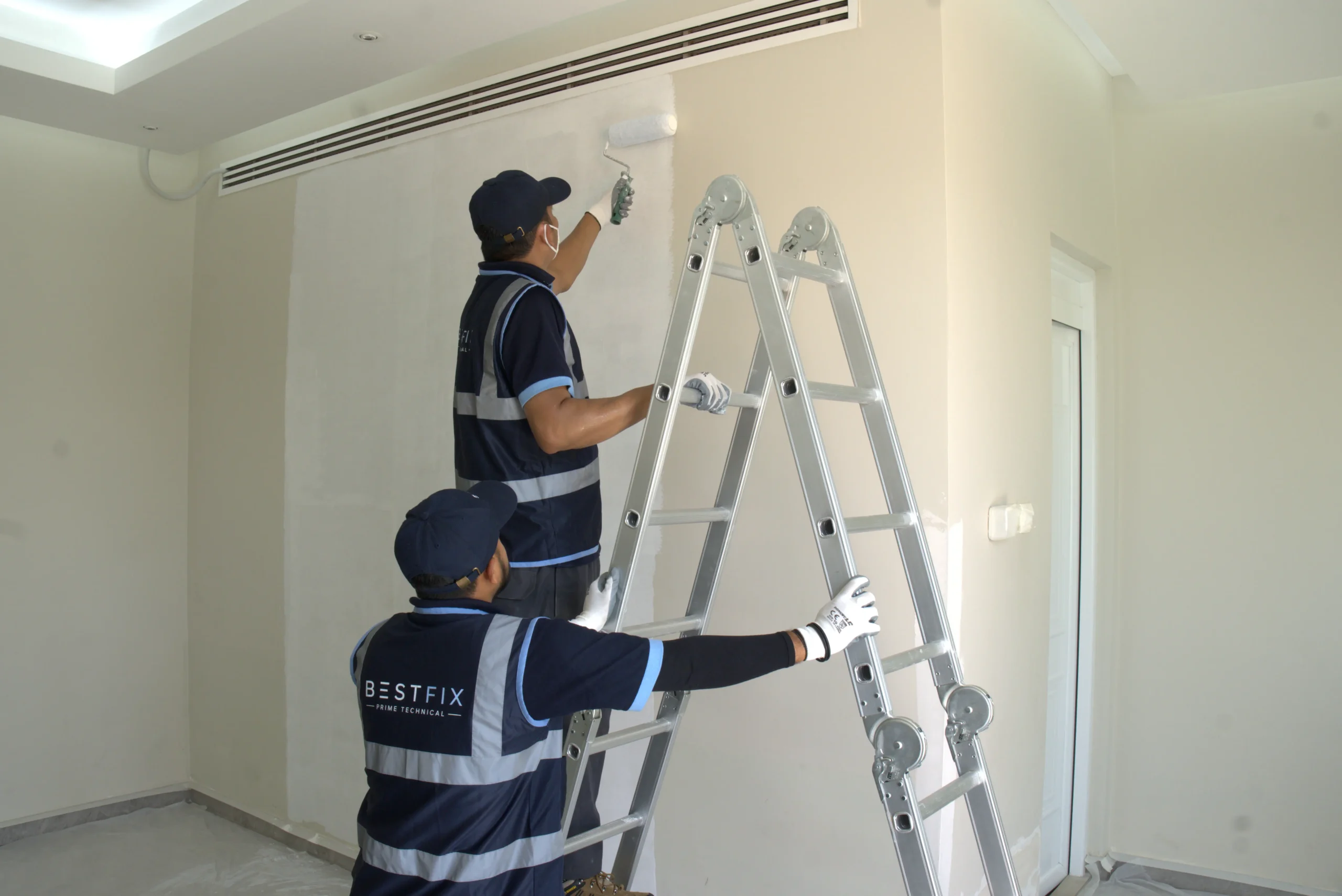
Interior Painting in Dubai: The Right Preparation for Every Surface
A gypsum ceiling, a greasy kitchen wall, a steamy bathroom and a wooden door frame all need different preparation and different paint. Getting those details right is what separates a finish that lasts from one that peels in a year.
In short: Best Fix Prime provides interior painting in Dubai for walls, ceilings, gypsum boards, doors, frames, skirting, wardrobes and indoor metalwork. Each surface gets the right preparation: degreasing, crack and hole repair, stain sealing, mould treatment and priming. We use moisture-resistant paints in kitchens and bathrooms, cut in clean edges and finish woodwork in a hard-wearing coat. Call or WhatsApp +971 50 108 4133.
Interior painting in Dubai often means dealing with problems that are specific to the way homes and offices here are built and used. Gypsum false ceilings are everywhere. AC units drip and leave stains. Kitchens see heavy cooking. Bathrooms are humid with little ventilation. Walls carry decades of fixings from previous tenants. Each of these needs a particular approach before the first coat of colour goes on. This page explains how we handle each surface and each common problem.
How should each interior surface be prepared and painted?
| Surface | Preparation | Typical finish |
|---|---|---|
| Plastered walls | Fill holes and cracks, sand, spot-prime repairs | Matt or eggshell emulsion |
| Gypsum ceilings and boards | Fill joints and screw heads, seal bare gypsum with primer | Matt ceiling paint |
| Kitchen walls | Degrease thoroughly, fill and sand | Washable satin or eggshell |
| Bathroom walls and ceilings | Remove peeling paint, treat mould, prime | Moisture-resistant satin |
| Wooden doors and frames | Sand, fill chips, undercoat bare wood | Satin or semi-gloss |
| MDF wardrobes and skirting | Light sand, prime edges and bare MDF | Satin or semi-gloss |
| Indoor metal railings | Remove rust, degrease, metal primer | Gloss or satin metal paint |
How are interior walls prepared?
Assess each surface
Walls, ceilings, doors, frames and skirting are checked for cracks, stains, damp, gloss and previous paint type.
Clean and degrease
Kitchen grease, smoke film and dust are washed off so the new paint can bond.
Repair
Holes, dents and cracks are filled; damaged gypsum and corners are rebuilt; gaps around frames are sealed.
Sand and spot-prime
Repairs are sanded flush, glossy surfaces are keyed, and stains, bare gypsum and repairs are primed.
Cut in and roll
Edges are cut in by brush for clean lines, then walls and ceilings are rolled in even coats.
Woodwork last
Doors, frames and skirting are painted with a harder-wearing finish once walls are done.
Preparation takes up much of the time on a good interior job. It is also the part that is easiest to skip and hardest to see on day one. A wall that has been properly filled, sanded and primed looks smooth and even in strong side light. A wall that has simply been rolled over shows every dent and patch as soon as the sun hits it.
How are gypsum ceilings painted?
Gypsum boards are used for false ceilings in almost every Dubai home and office. They are smooth and quick to install, but they need care when painting. Joints between boards and screw heads can show through if they are not filled and sanded properly. Bare or newly repaired gypsum absorbs paint unevenly and must be sealed with a primer first, or the ceiling will look patchy. Ceilings are painted before walls, so any drips or spatter on the walls are covered afterwards. A flat matt finish is usually best on ceilings because it hides small imperfections and reduces glare from lights.
How do you paint over water stains?
Water stains from leaks and AC drips are among the most common reasons people ask for interior painting. The key rule is that ordinary emulsion does not cover them. Minerals and tannins in the stain bleed through, and a yellow or brown mark reappears within days. First, the cause must be fixed. Then the area must be completely dry. Then the stain is sealed with a stain-blocking primer before normal paint is applied. If the gypsum or plaster is soft or crumbling, it is cut out and replaced before priming.
How do you deal with mould on walls and ceilings?
Black or grey spots in bathroom corners, above showers, behind wardrobes and around windows are usually mould. Painting straight over it does not work; the mould grows back through the new paint. The affected area is cleaned with a suitable mould treatment, left to dry and then primed and painted with a moisture-resistant or anti-mould paint. Just as important is dealing with the cause: poor ventilation, a faulty extractor fan, condensation from AC or a hidden leak. Our electricians and plumbers can fix these alongside the painting.
How are cracks repaired before painting?
Hairline cracks in plaster and gypsum are common, especially around door frames, windows and where walls meet ceilings. They are caused by small movements as buildings heat and cool. These cracks are opened slightly so filler can grip, filled with a flexible filler where movement is expected, sanded and primed. Cracks that are wider, growing or reappearing after previous repairs may indicate structural movement or settlement, and they should be looked at before simply filling and painting over them.
How are kitchens painted?
Cooking leaves a thin film of grease on kitchen walls and ceilings, even in kitchens that look clean. Paint does not bond to grease, so the new coat can peel or stay tacky. Walls are washed with a degreasing cleaner, rinsed and dried before painting. Areas behind the hob and around the extractor need particular attention. A washable satin or eggshell finish is best, because kitchen walls get splashed and need wiping regularly. Fitted cabinets, worktops and appliances are masked carefully.
How are bathrooms painted?
Bathrooms are the hardest interior rooms for paint. Steam from showers and baths condenses on walls and ceilings, and many apartment bathrooms have weak or no extractor fans. Peeling and bubbling paint is scraped back, mould is treated, and the surface is primed and finished with a moisture-resistant paint. Silicone around baths and basins is not painted; if it is discoloured, it should be replaced separately. Improving ventilation, such as repairing or upgrading the extractor fan, makes the new paint last much longer.
How are doors, frames and skirting painted?
Woodwork is usually painted after walls and ceilings. Doors, frames and skirting boards take knocks from feet, furniture and vacuum cleaners, so they need a harder-wearing finish than walls. Existing glossy paint is sanded to give a key, chips and dents are filled, and bare wood is primed and undercoated. The finish coat is applied with brushes and small rollers for a smooth result, and doors are painted in the right order so brush marks follow the panels. Door handles and hinges are masked or removed.
Can built-in wardrobes and cabinets be painted?
Yes. Painting built-in wardrobes and some types of cabinet doors is a cost-effective way to update a room without replacing them. MDF and wooden doors are cleaned, lightly sanded, primed and finished in a durable satin or semi-gloss. Laminate and high-gloss surfaces need special primers to make paint stick and are assessed case by case. Handles are removed and refitted once the paint has cured.
What about indoor metal railings and grilles?
Staircase railings, balustrades and window grilles inside villas and apartments are usually metal. Over time, the paint chips and rust appears, particularly on handrails that are touched daily. They are wire-brushed or sanded to remove rust and loose paint, degreased, primed with a metal primer and finished with a durable metal paint. Stair treads and floors are protected while this is done.
Why do clean edges matter so much?
The line where a wall meets a ceiling, a door frame or a skirting board is where a paint job looks professional or amateur. Wobbly edges, colour on the ceiling and paint on frames are the first things people notice. Our painters cut in by hand with a quality brush, using masking tape only where it genuinely helps, such as against finished surfaces that cannot be repainted. Cutting in is done before rolling, so the roller can come close to the edge without touching it.
How many coats does interior paint need?
Most interior walls need two finish coats for an even colour and full coverage, especially when changing colour, painting over repairs or covering a darker shade. Going from a deep colour to a light one can need a primer and then two coats. Repainting in the same colour on walls in good condition can sometimes be done in one coat, which we will tell you if it applies. Skipping the second coat to save time usually shows as patchy colour in strong light.
How long should paint dry between coats?
Water-based interior paints are usually touch-dry within an hour or two, but they need longer before the next coat, typically a few hours depending on the product, temperature and humidity. With AC running indoors, drying is generally steady. Full curing, when the paint reaches its final hardness, takes a couple of weeks. During that time, avoid scrubbing walls, pushing furniture hard against them or hanging heavy items.
Is interior paint safe for families?
Modern water-based interior paints have far lower odours and emissions than older solvent-based paints. Even so, we ventilate rooms while painting and for some time after, and recommend that babies, people with respiratory sensitivities and pets stay out of freshly painted rooms until the smell has cleared. Low-odour and low-emission paints are available on request, and we will plan the order of rooms to keep sleeping areas clear when needed.
How do you fix walls with old, flaking paint?
Flaking or peeling paint means the old layers have lost their grip on the wall, often because of moisture, grease or a paint applied over a glossy or dusty surface. Painting over it only adds weight to a layer that is already failing. The loose paint is scraped back until only firmly bonded paint remains, the edges are feathered with sanding so they do not show through, and the bare areas are primed. On walls where large areas are failing, it can be better to strip back further and start again. The cause, such as damp, must be dealt with first.
What about walls painted with oil-based paint?
Some older homes and offices have walls or woodwork painted with oil-based gloss or eggshell. Water-based paint applied directly over it can peel off in sheets. We test the existing paint, and where it is oil-based, the surface is cleaned, sanded to a dull finish and primed with a bonding primer before the new paint goes on. This step is easy to miss and is one of the most common causes of interior paint failure when people paint over old finishes themselves.
How do you paint a room with high ceilings?
High ceilings in living rooms, entrance halls and stairwells need the right access equipment and more careful lighting, because uneven coverage is easy to miss when you are working close to a surface high above the floor. We set up stable platforms or ladders, protect the floor under them and check each section under good light before moving on. Cutting in along the top of high walls is done slowly, because a wobbly line at that height is visible from everywhere in the room.
Can interior painting cover nicotine or smoke stains?
Yes, but it needs the right approach. Smoke and nicotine leave a yellow-brown film on walls and ceilings that bleeds through ordinary paint, much like a water stain. Surfaces are washed with a suitable cleaner, rinsed and dried, then sealed with a stain-blocking primer before the finish coats. In rooms with heavy staining, two coats of primer may be needed. The result is a clean, fresh room without the old stains showing through.
How do you get an even finish on large walls?
Large walls, especially in open-plan living areas, show any unevenness in colour or sheen. The secret is keeping a wet edge, which means rolling each section into the previous one while it is still wet, so there are no visible overlap lines. The whole wall is completed in one go, rather than stopping halfway. Paint from different tins is mixed together first, so the colour is consistent across the whole wall.
What happens to light switches, sockets and AC grilles?
Switch and socket plates are unscrewed and removed where it is safe to do so, or carefully masked, so paint can go right up to the edge of the backbox without getting on the plates. AC grilles and diffusers are masked or removed. Light fittings are protected or taken down. Once painting is finished and dry, everything is refitted neatly. If any plates or grilles are cracked or discoloured, our electricians and AC technicians can replace them at the same time.
Should you use a primer on every wall?
Not always. Primer is essential on bare gypsum and plaster, on repairs and filled areas, on stains, on glossy or oil-based surfaces and when making a big colour change. On walls that are already painted with a sound water-based paint in a similar colour, a full primer coat is often unnecessary, and spot-priming the repairs is enough. Our painters decide wall by wall, and the quote shows where primer will be used, so you are not paying for coats that are not needed or missing ones that are.
Can interior painting be done in occupied offices and homes?
Yes. Interior painting in Dubai is often carried out in spaces that are in daily use. We work room by room, keep dust down during sanding, ventilate as we go and clean at the end of each day. In homes, sleeping areas are planned so they are ready at night. In offices, interior work can be done in the evenings or at weekends so desks and meeting rooms are ready for the next working day.
How do you look after a freshly painted interior?
For the first couple of weeks, treat the walls gently while the paint cures. After that, most marks can be removed with a soft cloth and mild soapy water. Avoid abrasive pads and strong chemical cleaners, which can dull or remove the finish. Keep the leftover paint for touch-ups, stored somewhere cool and out of the sun. In bathrooms, run the extractor fan during and after showers to keep moisture off the new paint.
Why choose Best Fix Prime for interior work?
We prepare each surface the way it needs, seal stains properly, treat mould at the source and cut clean edges. Because Best Fix Prime also covers plumbing, AC and electrical work, we can fix the leak behind the stain, the AC drip on the ceiling or the broken extractor fan in the bathroom before painting. Interior painting in Dubai with us comes with a written quote that lists the preparation for each area.
The cost depends on the area, ceiling heights, the surfaces included, the condition of each surface and how much preparation is needed. Walls in good condition repainted in the same colour cost less than stained, cracked walls changing from dark to light. Doors, frames, wardrobes and railings take more time per square metre than walls. We visit, check every surface and give a written quote that sets out the preparation and finish for each area.
Explore our other painting services
Get an interior painting quote
Tell us which rooms and surfaces need painting, and send photos of any stains, cracks or damp patches. Call or WhatsApp +971 50 108 4133, or use the form at the top of the page.
Best Fix Prime (Bestfix Prime Technical Services LLC)
AddressRoom 201, 3rd Avenue by Ya Building, Street 27, Mirdif, Dubai, United Arab Emirates
Call and WhatsApp+971 50 108 4133
Emailinfo@bestfixprime.ae
HoursOpen 24 hours, 7 days a week
Frequently asked questions
What does interior painting in Dubai include?
Interior painting in Dubai with us covers walls, ceilings, doors, frames, skirting, wardrobes and indoor metal, with surface-specific preparation.
How do you paint gypsum ceilings?
Joints and screw heads are filled, bare gypsum is primed, and a matt ceiling paint is applied before the walls.
Why do water stains come through new paint?
Minerals in the stain bleed through emulsion. The stain needs a stain-blocking primer once the area is dry.
Can you paint over mould?
No. Mould is treated first, then primed and painted with a moisture-resistant or anti-mould paint.
Why is my bathroom paint peeling?
Steam and poor ventilation. The area is scraped, treated, primed and repainted, and ventilation is improved.
Do you degrease kitchen walls?
Yes. Paint will not bond to grease, so walls are washed and dried first.
How do you repair cracks before painting?
Cracks are opened, filled with flexible filler, sanded and primed.
How many coats do interior walls need?
Usually two finish coats. Same-colour repaints on sound walls may need one.
Can you paint built-in wardrobes?
Yes. MDF and wood are sanded, primed and finished. Laminate needs special primer.
Do you paint doors and skirting?
Yes, with a harder-wearing satin or semi-gloss finish.
Can you paint indoor metal railings?
Yes, after removing rust and priming with a metal primer.
How long until I can hang pictures?
Wait about two weeks for the paint to cure fully before hanging heavy items.
Is interior paint safe for children?
Modern water-based paints are low odour. Keep children out of fresh rooms until the smell clears.
Do you use masking tape everywhere?
Only where it helps. Most edges are cut in by hand for cleaner lines.
Should ceilings be painted before walls?
Yes, so drips on walls are covered by the wall coats.
Can you change a dark wall to white?
Yes, usually with a primer and two finish coats.
What finish is best on ceilings?
Flat matt, which hides imperfections and reduces glare.
Do you fix the leak before painting a stain?
Yes. Our plumbing and AC teams fix the cause first.
Do you replace damaged gypsum?
Yes. Soft or crumbling sections are cut out and replaced before painting.
How do I get an interior painting quote?
Call or WhatsApp +971 50 108 4133 and send photos of the rooms.