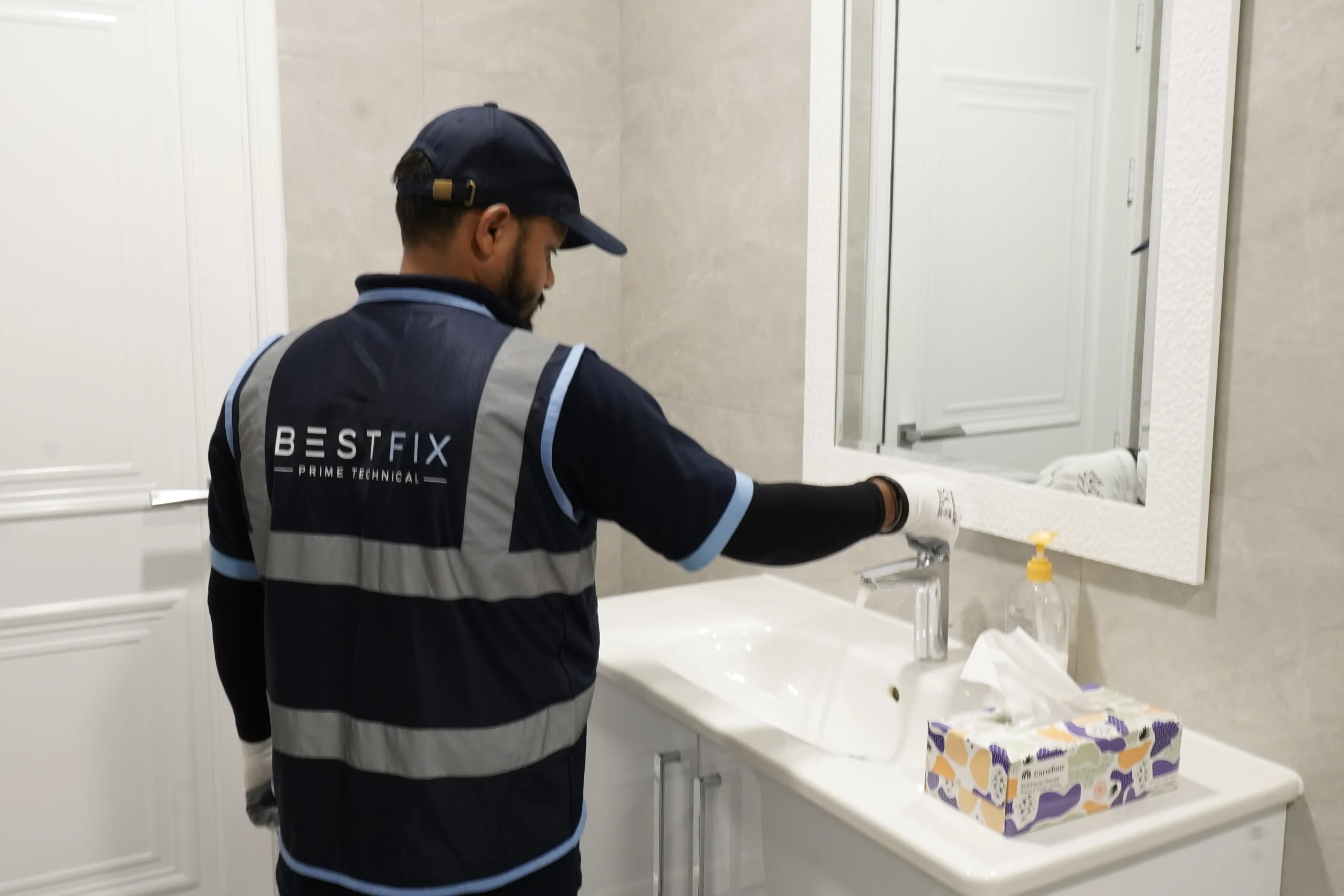
Residential Plumbing AMC in Dubai: Stop Leaks Before They Start
Water damage is one of the most expensive and disruptive problems a home can have, and most of it starts small: a braided hose that has rusted, a cistern valve that never quite shuts off, a shower seal that has cracked. A plumbing maintenance plan finds those things on a schedule, before they cost you a ceiling.
In short: a residential plumbing AMC in Dubai from Best Fix Prime is a plumbing-only annual contract for villas, townhouses and apartments, built around leak prevention. It includes planned inspections of taps, toilets, showers, drains, hoses, valves and water heaters, meter tests for hidden leaks, replacement of worn parts as agreed, tank and pump checks for villas and priority response if water escapes. Call or WhatsApp +971 50 108 4133.
A residential plumbing AMC in Dubai suits households and landlords who are less worried about the AC and more worried about water. Perhaps you have already had a leak that damaged a ceiling or reached a neighbour. Perhaps the home is older, with original hoses and valves. Perhaps you are a landlord who keeps getting tenant calls about running toilets and slow drains. Whatever the reason, the principle is the same: inspect regularly, replace worn parts before they fail and respond quickly when something does go wrong.
What does a plumbing-only contract cover?
| Area | What planned inspections include |
|---|---|
| Kitchen | Sink hoses and traps, mixer, under-sink valves, dishwasher and washing machine connections |
| Bathrooms | Mixers, shower valves, bidet sprays, concealed and exposed cisterns, shower and bath seals |
| Drains | Flow tests on sinks, basins, showers and floor drains, trap cleaning where needed |
| Water heaters | Leaks, relief valve operation, thermostat, discoloured water |
| Hidden leaks | Water meter test with all outlets off, checks for damp and stains |
| Villa extras | Tank float valves, transfer and pressure pumps, outdoor taps, irrigation connections |
How does a residential plumbing AMC work?
Plumbing baseline check
Every tap, toilet, shower, drain, hose, valve and water heater is checked, and a meter test is done for hidden leaks.
Risk list
Old hoses, weeping valves, worn seals and slow drains are listed by priority, so the riskiest items are dealt with first.
Inspection calendar
Planned inspections are spread through the year, with water heaters checked before the cooler months.
Planned inspections
Each inspection repeats the leak checks, tests drains and heaters and replaces worn parts as agreed.
Priority leak response
If water escapes between visits, contract homes are prioritised, and the plumber knows the home's layout.
Plumbing record
Each visit, part replaced and finding is recorded, with photos, for owners, landlords and tenants.
Which plumbing parts fail most often in Dubai homes?
A handful of parts cause most domestic leaks. Braided flexible hoses under sinks and on appliances rust and burst, often without warning. Cistern fill and flush valves wear and scale up, causing running toilets and hidden leaks inside concealed cisterns. Bidet spray hoses split under constant pressure. Silicone and grout around showers shrink and crack, letting water behind tiles. Water heater relief valves start to drip and corrode nearby fittings. Each of these has a predictable life in Dubai's hard water and heat, which is why scheduled inspection and replacement work so well.
Why replace hoses before they fail?
A burst braided hose under a kitchen sink or behind a washing machine can release a large amount of water in a short time, especially if nobody is home. Hoses look fine from the outside long after the inner lining has weakened, and the metal braiding rusts in damp cabinets. Under a plumbing contract, hoses are inspected on every visit and replaced on a sensible schedule, or sooner if they show rust, kinks or bulges. It is a small cost compared with replacing a kitchen floor or a neighbour's ceiling.
How are hidden leaks found on planned visits?
Not every leak is visible. On each inspection, the plumber carries out a simple meter test: every tap and appliance is turned off, and the water meter is watched for movement. If it moves, water is going somewhere it should not, and the plumber traces it. They also check for the quieter signs of leaks: damp patches, bubbling paint, swollen skirting boards and musty smells near bathrooms and kitchens. Finding a hidden leak during a planned visit is far better than discovering it months later through a stained ceiling.
What about running toilets and concealed cisterns?
Running toilets are one of the most common plumbing faults in Dubai and one of the most wasteful. In homes with concealed cisterns, the fault is often invisible, with water trickling into the bowl or into the wall cavity. On planned visits, every cistern is checked for correct fill level and a clean shut-off, and fill and flush valves are cleaned or replaced as needed through the flush plate opening. Fixing these early keeps water bills down and prevents damp inside walls.
How are drains kept flowing?
Slow drains rarely block overnight. Kitchen sinks collect grease, basins collect hair and soap and floor drains collect sand and lint. On planned visits, drains are flow-tested, traps are cleaned where needed and early blockages are cleared before they become a problem. Floor drains in rarely used bathrooms are topped up so their traps do not dry out and let smells into the home.
Why are water heaters part of the plumbing plan?
Water heaters are under pressure, hold hot water and often sit in ceilings or cupboards where a leak is not noticed until it shows below. Relief valves can drip and corrode fittings, sediment from hard water builds up inside and thermostats can fail. Planned checks look for leaks, test the relief valve and confirm the heater is working correctly. A heater that is starting to fail is flagged early, so it can be replaced before it floods a ceiling or leaves the home without hot water.
What extra does a villa plumbing contract include?
Villas have plumbing systems that apartments do not. Ground and roof tanks are controlled by float valves that can stick and cause overflows. Transfer and pressure pumps can wear and leak. Outdoor taps and irrigation connections can leak into the ground near the villa's foundations. A villa plumbing contract adds checks on all of these, and can include tank cleaning at agreed intervals. The aim is a villa water system that runs reliably from the mains connection to the last tap.
How does a plumbing contract help apartments?
In apartments, a leak is never just your problem. Water reaches the flat below quickly, leading to damaged ceilings, building management involvement and sometimes disputes. A plumbing contract focuses on the parts most likely to cause that: kitchen hoses, washing machine connections, concealed cisterns, shower seals and water heaters. If a leak does happen, the plumbing record shows the apartment was maintained regularly, which helps when responsibility is being discussed.
How does a plumbing contract help landlords?
Plumbing problems are among the most frequent tenant complaints. Running toilets, dripping taps, slow drains and lukewarm water all lead to calls and messages. A plumbing contract gives tenants one number to call, deals with small faults quickly and keeps landlords informed through visit reports. Planned inspections reduce the risk of a serious leak damaging the property while it is let, and the record supports the move-out inspection.
What happens when water escapes between visits?
Even with planned inspections, leaks can happen. If water is escaping, turn off the main valve if you can and call us. Contract homes are prioritised, including on our 24/7 emergency line, and the plumber arrives knowing the home's layout, where the valves are and what has been replaced recently. That shortens the time to stop the water and fix the cause.
How does hard water affect plumbing maintenance?
Dubai's hard water leaves mineral scale in taps, shower heads, cistern valves, mixer cartridges and water heaters. Scale makes cartridges stiff, valves stick and aerators spray unevenly, and it shortens the life of many plumbing parts. On planned visits, aerators and shower heads can be descaled, stiff cartridges flagged and heaters checked for sediment. Some households choose to add a water softener or filter, which we can advise on during any inspection or at the baseline check.
What can you do between plumbing inspections?
- Know where your main water valve is and check it turns
- Turn off the washing machine valve and bidet spray valves when travelling
- Listen for toilets refilling when nobody has flushed
- Look under sinks for damp when cleaning
- Keep grease and wipes out of drains
- Report any drip, stain or smell straight away
What does the plumbing baseline check find?
The first visit often turns up more than people expect. Typical findings include braided hoses with rust on the fittings, isolating valves under sinks that have seized and cannot be turned off, cisterns that refill every few minutes, bidet spray valves left permanently open, cracked silicone around showers, slow drains and water heater relief valves that drip. In older homes, there may be signs of past leaks that were never fully fixed. Each finding is photographed and ranked by risk, and the most urgent are dealt with first, so the contract starts by removing the biggest leak risks in the home.
Why do isolating valves matter?
Every sink, toilet, washing machine and water heater should have a small isolating valve, so it can be turned off in an emergency or for repair without shutting down the whole home. In many Dubai homes, these valves are rarely touched and seize with scale, which means that when a hose bursts, the only option is the main valve. During planned inspections, isolating valves are exercised and stiff ones are replaced, so if something does fail, you can stop the water at the source in seconds.
How do plumbing inspections fit around family life?
A plumbing inspection is less disruptive than people expect. The plumber works room by room, turning off water only briefly where parts are replaced, and the meter test needs just a short period with no water use. Visits can be timed around school runs, work and meals, and most homes are back to normal within a couple of hours. Where parts need replacing, the plumber explains what and why before starting.
Can a plumbing contract reduce water bills?
Yes. Running toilets, dripping taps and hidden leaks all waste water continuously, often without anyone noticing. A single running cistern can add noticeably to a monthly bill. By finding and fixing these on every inspection, a residential plumbing AMC in Dubai helps keep water use, and the bill, where it should be. The meter test on each visit also gives early warning if consumption rises unexpectedly between visits.
What about shower and bath seals?
Silicone around showers, baths and basins is a small detail that prevents a lot of damage. When it cracks, peels or comes away from the tiles, water runs behind the shower tray or bath and soaks into walls and floors, often showing up in the next room or the flat below. Planned inspections check every seal, and failed silicone is cut out and replaced. It is one of the cheapest and most effective leak prevention measures in any home.
Is a plumbing contract worth it for a new home?
Yes. New homes often have installation faults that only show in the first months: loose compression fittings, cisterns set to overfill, drains with poor falls and silicone that was applied in a hurry. A contract from the start catches these early and builds a plumbing record from day one, which is useful if you need to raise issues with the developer during the defects period.
How does a plumbing contract protect you in disputes?
When a leak damages a neighbour's ceiling or causes problems at the end of a tenancy, the first question is often whether the plumbing was properly maintained. A plumbing record with dated visits, photos and a list of parts replaced is strong evidence that it was. For owners and tenants, it shows reasonable care. For landlords, it helps separate a genuine failure from neglect. For everyone, it makes conversations with building management, neighbours and agents more straightforward.
What happens if a bigger plumbing problem is found?
Sometimes an inspection uncovers more than worn parts: a corroded section of pipe, a water heater close to failing, a drain with the wrong fall or a cracked tank. These are outside the routine scope, but finding them early is exactly why the contract exists. The plumber explains what was found, with photos, and you receive a separate quote for the repair. Nothing is done without your agreement, and in the meantime the problem is made safe if needed.
How do washing machines and dishwashers fit into the plan?
The appliances themselves are outside the scope, but their water connections are among the most common leak points in any home. Inlet hoses, waste hoses, standpipes and the isolating valves behind each appliance are inspected on every visit. Waste hoses that have slipped or are set at the wrong height are corrected, and inlet hoses are replaced when worn. Many serious kitchen and laundry leaks start here, so they receive close attention.
Can you combine a plumbing plan with tank cleaning?
Yes. For villas and townhouses with their own tanks, combining a plumbing contract with scheduled tank cleaning makes sense. Clean tanks send less sediment into pipes, valves and heaters, which reduces wear on the parts the plumbing plan looks after. Both can be scheduled on the same visits, with the tanks cleaned first and the plumbing inspected afterwards.
How often are plumbing inspections scheduled?
The schedule depends on the home. A newer apartment with one or two bathrooms may need fewer inspections than an older villa with several bathrooms, multiple heaters, tanks and pumps. Homes that have had leaks before may benefit from more frequent checks at first. The calendar is set after the baseline check, and it can be adjusted as the risks in the home are reduced.
What about homes left empty for long periods?
Homes left empty over summer or between tenancies are at higher risk, because a leak can run for weeks before anyone notices. Before you leave, turn off the main valve if possible, or at least the valves to appliances and bidet sprays. A plumbing inspection timed just before you return checks for any leaks, runs the taps to clear stagnant water and makes sure everything is working when you get back.
Why choose Best Fix Prime for a plumbing contract?
Our plumbers know the systems found in Dubai homes, from concealed cisterns to villa tank and pump set-ups. We inspect on a schedule, replace worn parts before they fail, keep a record of every visit and respond with priority when water escapes. A residential plumbing AMC in Dubai with us is built around one goal: keeping water where it belongs, in the pipes and out of your walls, floors and ceilings.
How is a residential plumbing AMC in Dubai priced?
Pricing depends on the home type and size, the number of bathrooms and kitchens, the number of water heaters, whether tanks and pumps are included, the age of the plumbing, the number of planned inspections and what is included for parts and repairs. After the baseline check, you receive a written proposal setting out the scope and cost.
See our other residential plans
Arrange a plumbing baseline check
Tell us your home type, the number of bathrooms and whether you have had leaks before. Call or WhatsApp +971 50 108 4133, or use the form at the top of the page. The baseline check takes place at a time that suits you. Afterwards, you receive a written summary of every risk found, ranked by priority, and a proposal for your plumbing plan with the inspection calendar and the cost. Anything urgent found on the day can be fixed straight away with your agreement.
Best Fix Prime (Bestfix Prime Technical Services LLC)
AddressRoom 201, 3rd Avenue by Ya Building, Street 27, Mirdif, Dubai, United Arab Emirates
Call and WhatsApp+971 50 108 4133
Emailinfo@bestfixprime.ae
HoursOpen 24 hours, 7 days a week
Frequently asked questions
What is a residential plumbing AMC in Dubai?
A residential plumbing AMC in Dubai is a plumbing-only annual contract focused on leak prevention, with planned inspections and priority leak response.
What does a plumbing contract cover?
Taps, toilets, showers, drains, hoses, valves, water heaters and, for villas, tanks and pumps.
How do you find hidden leaks?
With a water meter test on each visit, plus checks for damp, stains and smells.
Are hoses replaced under the contract?
They are inspected every visit and replaced on a sensible schedule or when worn.
Can a concealed cistern be serviced without breaking tiles?
Yes. It is checked and serviced through the flush plate opening.
Are water heaters included?
Yes. Leaks, relief valves and thermostats are checked.
Do villa contracts include tanks and pumps?
Yes. Float valves, pumps and tank cleaning can be included.
Does a plumbing contract help apartments?
Yes. It focuses on the parts most likely to leak into the flat below.
Do contract homes get priority for leaks?
Yes, including on the 24/7 emergency line.
Can landlords take a plumbing contract?
Yes. Tenants call us directly and landlords receive reports.
Can tenants take a plumbing contract?
Yes, if plumbing maintenance is their responsibility under the tenancy.
How does hard water affect my plumbing?
Scale stiffens cartridges, sticks valves and shortens the life of parts.
Do you descale taps and shower heads?
Yes, on planned visits where needed.
Are drains checked?
Yes. Drains are flow-tested and traps cleaned where needed.
What if I have already had a leak?
The baseline check focuses on similar risks elsewhere in the home.
Do you keep a plumbing record?
Yes, with every visit, part replaced and finding, plus photos.
Are major plumbing replacements included?
No. Re-piping and major replacements are quoted separately.
Can the contract start at any time?
Yes, beginning with a baseline check.
How is the plumbing contract priced?
On the home size, fixtures, heaters, tanks and inspection schedule.
How do I arrange a baseline check?
Call or WhatsApp +971 50 108 4133 with your home details.