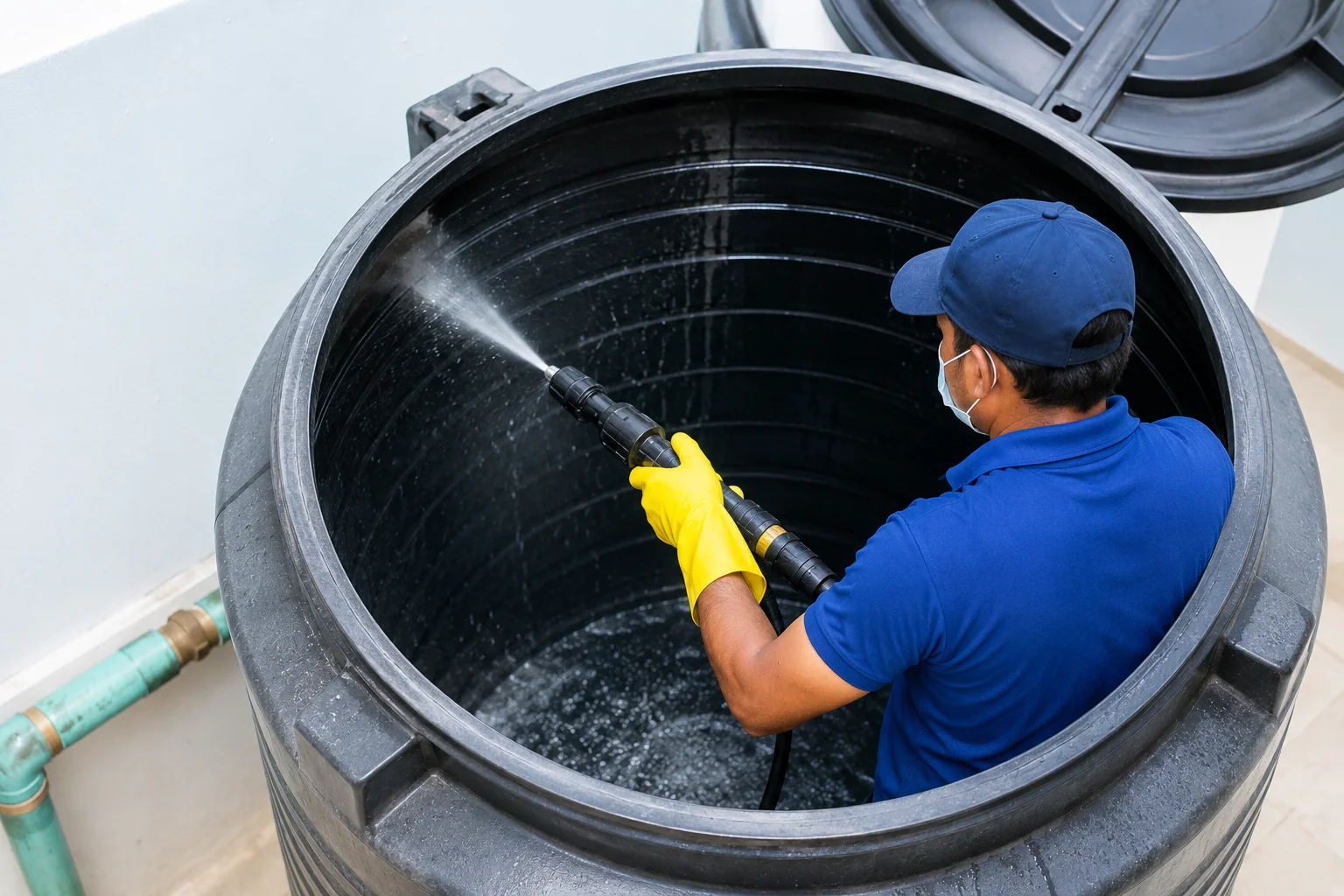
Water Tank Disinfection in Dubai After Contamination, Repairs or Disuse
A bird in the roof tank. Muddy water after a ground tank cover failed. A tank that has sat untouched all summer. Some situations need more than a routine clean. They need proper disinfection, done in the right order.
In short: Best Fix Prime provides water tank disinfection in Dubai for homes, villas and buildings. We disinfect tanks as part of every clean, and on their own after contamination, repairs, new installations or long periods unused. The source of contamination is removed, the tank cleaned, a suitable disinfectant applied to every surface and left for the right contact time, then rinsed, refilled and flushed through. Call or WhatsApp +971 50 108 4133.
Water tank disinfection in Dubai is often misunderstood. Some people think adding a little chlorine to the tank is enough. Others think a clean tank is automatically a disinfected one. Neither is quite right. Disinfection only works properly on a surface that has already been cleaned, because sludge and biofilm shield bacteria from the disinfectant. And cleaning alone, without disinfection, leaves bacteria on the walls ready to multiply again. This page explains when disinfection is needed, how it is done and what to expect afterwards.
When does a tank need disinfection?
| Situation | Why disinfection is needed | How soon |
|---|---|---|
| Routine cleaning | Kills bacteria left on surfaces after scrubbing | Every clean |
| Animal, bird or insects found in the tank | Direct biological contamination | As soon as possible |
| Soil, mud or garden water got in | Bacteria and organic matter from outside | As soon as possible |
| Tank repaired or opened for work | Tools, hands and debris introduced | Before returning to use |
| New tank installed | Construction dust and handling contamination | Before first use |
| Tank unused for weeks or months | Stagnant, warm water encourages growth | Before returning to use |
| Odd smell, taste or slimy water | Signs of bacterial growth | Promptly |
Why must the tank be cleaned before disinfection?
Disinfectants work by contact. If a layer of sludge covers the tank floor or biofilm coats the walls, the disinfectant reacts with that material first and is used up before it reaches the bacteria underneath. Biofilm in particular protects bacteria very effectively. Pouring disinfectant into a dirty tank may make the water smell of chlorine for a while, but it leaves the problem in place. That is why every disinfection we carry out starts with draining, removing sludge and scrubbing every surface.
How is a water tank disinfected?
Find out what happened
We ask what prompted the disinfection: a routine clean, a contamination event, repairs, a new tank or a long period unused.
Remove the source
Anything that caused contamination, such as debris, a dead animal or failed cover, is removed and dealt with first.
Clean before disinfecting
Sludge and biofilm are removed and surfaces scrubbed, because disinfectant cannot work through dirt.
Apply the disinfectant
A suitable disinfectant is applied to all internal surfaces, including the underside of the lid, corners and fittings.
Allow contact time
The disinfectant is left in contact for the required time so it can act on bacteria on every surface.
Rinse, flush and refill
The tank is rinsed, refilled and the pipework flushed until the water runs fresh at every outlet.
The disinfectant used, its strength and the contact time depend on the tank size, material and the reason for disinfection. A routine disinfection after cleaning is different from a disinfection after an animal has been found in the tank. We explain what we are using and why, and give you advice on water use for the first day after the tank is back in service.
What disinfectants are used in water tanks?
Chlorine-based disinfectants are the most common choice for water tanks, because they are effective against a wide range of bacteria and are widely used in water treatment. They are applied at a suitable strength to tank surfaces, rather than simply poured into the water. Other suitable disinfectants may be used in particular situations. In every case, the disinfectant is suited to drinking-water storage, used at the correct strength and thoroughly rinsed out before the tank goes back into service.
What should you do if an animal is found in the tank?
Finding a bird, lizard, rat or other animal in a water tank is unpleasant and more common than people think, especially in roof tanks with damaged lids and ground tanks with loose covers. Stop using the water for drinking, cooking and brushing teeth straight away. Do not try to remove the animal and carry on using the tank. Call us to drain, clean and disinfect the tank. Just as important, find out how it got in. A damaged lid, missing vent screen or unsealed cover must be fixed, or it will happen again.
What if soil or garden water gets into a ground tank?
Ground tanks in gardens can be contaminated if the cover fails, if the tank is cracked or if heavy irrigation or rain floods the area around the cover. Muddy water, soil in the tank or a strong earthy smell are the usual signs. The tank needs to be drained, the soil and sludge removed, surfaces scrubbed and disinfected, and the entry point repaired. Raising the cover frame above ground level and redirecting irrigation away from the tank help prevent it happening again.
Why disinfect a tank after repairs?
When a tank is opened for repair, whether to fix a leak, replace a float valve, reseal a joint or replace a lid, people and tools enter or reach into the tank. Dust, debris and bacteria come with them. Disinfecting after repairs, before the tank goes back into service, is a simple precaution that avoids introducing contamination. When we carry out tank repairs ourselves, disinfection is included as standard.
Should a new tank be disinfected before use?
Yes. A new tank may contain dust, debris from installation, residues from manufacturing and handling, and sometimes small pieces of material from cutting pipes. Before a new tank is used, it should be cleaned out, disinfected and flushed. The same applies to tanks in newly handed-over villas and buildings that have been sitting empty since construction.
What about tanks left unused over summer?
Many Dubai homes are empty for weeks over summer. During that time, water sits still in the tanks and pipes and warms up in the heat, which creates ideal conditions for bacteria. When you return, a clean and disinfection before using the water again is the safest option, especially for households with young children, older relatives or anyone with a weakened immune system. Booking it for the day before your return means you come home to fresh water.
How long until the water can be used?
After disinfection, the tank is rinsed and refilled with fresh supply water, and the pipework is flushed by running all outlets. Once this is done and the water runs clear without a strong chlorine smell, it is generally fine for normal household use. After a contamination event, we may recommend waiting longer before using the water for drinking, or using bottled water for a short period. We give you clear advice for your situation when we hand over.
Why does the water smell of chlorine afterwards?
A faint chlorine smell for a short time after disinfection is normal, especially from hot taps, and it fades as fresh water replaces what is in the tank and pipes. A strong or lasting smell usually means the tank or pipes need more flushing. If the smell persists beyond a day, let us know and we will check and flush again.
Should the pipes and water heater be disinfected too?
After a serious contamination event, contaminated water may have entered the pipes and water heater as well as the tank. In those cases, the system should be flushed thoroughly, and the water heater drained and refilled. For routine disinfection, flushing all outlets after the tank is refilled is usually enough. We advise on the right approach depending on what happened.
Can disinfection fix a recurring smell?
If a musty or rotten-egg smell keeps coming back, the cause is often biofilm or sludge that keeps regrowing in the tank, or contamination getting in through a damaged lid or cover. A thorough clean and disinfection usually removes the smell, but it will return unless the entry points are sealed and the tank is cleaned regularly. Sometimes the smell comes from the water heater or drains instead, which our plumbers can check.
How can you prevent contamination?
- Make sure lids and covers seal properly and are secured
- Fit fine mesh screens on vents and overflow pipes
- Raise ground tank covers above surrounding ground level
- Keep irrigation and garden water away from ground tanks
- Keep the area around roof tanks clear of debris and nests
- Clean and disinfect tanks on a regular schedule
What is biofilm, and why is it so hard to remove?
Biofilm is a thin, slimy layer that forms when bacteria attach to a surface and surround themselves with a protective coating. In water tanks, it grows on walls, floors, the underside of lids and inside pipes. You can often feel it as a slippery film when you run a hand along the inside of an uncleaned tank. Biofilm protects the bacteria inside it from disinfectants, so a quick dose of chlorine kills only the outer layer. Physical scrubbing breaks the biofilm up, and disinfection then reaches what is left. That is why scrubbing and disinfection always go together.
Is it safe to use the water while a contamination is suspected?
If you suspect contamination, such as an animal in the tank, muddy water, a strong unusual smell or slimy water, stop using it for drinking, cooking, making baby formula and brushing teeth. Use bottled water for those until the tank has been cleaned and disinfected. Showering and flushing toilets are generally lower risk, but if the water looks or smells clearly wrong, it is sensible to limit contact. If anyone in the household feels unwell and you suspect the water, seek medical advice.
What happens to dead animals and debris found in the tank?
Anything found in the tank, such as an animal, nesting material, leaves or rubbish, is removed carefully, bagged and disposed of. The area of the tank where it was found receives extra attention during scrubbing and disinfection. We photograph what was found, so you have a record, and we inspect the lid, vents and covers to identify how it got in. Fixing that entry point is part of the job.
Does disinfection need to happen more often in Dubai?
Warm temperatures speed up bacterial growth, and roof tanks in Dubai can hold water that becomes very warm in summer. Dust and sand carried by the wind also bring organic material into tanks with poor lids. For these reasons, regular cleaning and disinfection matter more in Dubai than in cooler climates. For most homes, disinfection as part of a clean at least once or twice a year is a sensible minimum, with extra disinfection after any event that might introduce contamination.
What about disinfection for clinics, nurseries and food businesses?
Businesses that serve vulnerable people or handle food often have stricter internal standards for water hygiene. Clinics, nurseries, schools, restaurants and food production premises may want tanks disinfected more frequently and documented carefully. We can schedule regular water tank disinfection in Dubai for these premises, outside operating hours, with photos and records for each visit to support your own hygiene procedures.
Can a tank be too damaged to disinfect properly?
Sometimes. Tanks with deep cracks, crumbling concrete, heavily corroded steel or brittle, cracked plastic can harbour bacteria in places disinfection cannot reach, and they may keep letting contamination in. In those cases, cleaning and disinfection give a short-term improvement, but repair, relining or replacement is needed for a lasting result. We will tell you honestly if a tank has reached that point, and explain the options and costs before anything is decided.
What is the difference between cleaning and disinfection?
Cleaning removes what you can see: sludge, sediment, scale, slime and debris. Disinfection deals with what you cannot see: the bacteria left on surfaces after cleaning. A tank that has been cleaned but not disinfected may look spotless but still have bacteria on its walls, ready to multiply as soon as warm water fills it again. A tank that has been disinfected without cleaning still has sludge and biofilm protecting bacteria from the disinfectant. Both steps are needed, every time, which is why we never offer one without the other for routine work.
Can you disinfect a tank without fully draining it?
In some situations, such as a large building tank that cannot be taken out of service, a tank can be dosed while full as a temporary measure. However, this is far less effective than draining, cleaning and disinfecting surfaces directly, because sludge and biofilm remain. We only recommend in-place dosing as a short-term step until a proper clean can be scheduled, and we explain the limits clearly.
How do you check the job was done properly?
Before-and-after photos show that the tank was emptied, scrubbed and cleaned. After refilling and flushing, the water is checked for appearance and smell at the outlets. If you want independent confirmation of water quality, especially after a serious contamination event, a laboratory water test can be arranged, and we can advise on when to take the sample.
What details help us respond to a contaminated tank?
- What was found or noticed, and when
- Whether the tank is a roof tank, ground tank or building tank
- Its approximate size and material
- Whether you have stopped using the water
- Whether anyone has felt unwell
- Photos of the tank, lid or cover if it is safe to take them
Should tanks be disinfected after a dust storm?
A well-sealed tank should not be affected by a dust storm. But if lids are loose, vents are unscreened or covers do not seal, heavy dust and sand can blow straight into the water. If you notice grit in the taps or cloudy water after a storm, check the tank lid and, if dust has got in, book a clean and disinfection. It is also a good reminder to check that lids and screens are in good condition before the next storm season, so the same thing does not happen again.
Why choose Best Fix Prime for disinfection?
We disinfect properly: clean first, then disinfect every surface, allow the right contact time, rinse and flush. We find and fix the cause of contamination, not just its effects, and give you clear advice on using the water afterwards. Water tank disinfection in Dubai with us is available for homes, villas and buildings, with prompt visits after contamination events and clear before-and-after photos every time.
Disinfection is included in every routine tank clean we carry out. Standalone or urgent disinfection after a contamination event is priced on the tank size, the cleaning needed, whether pipes and heaters also need flushing and any repairs to lids or covers. Contact us with the details and we will confirm the price and how soon we can attend.
Arrange tank disinfection
Tell us what happened, the tank type and size and whether you have stopped using the water. Call or WhatsApp +971 50 108 4133, or use the form at the top of the page. For contamination events, we prioritise the visit and talk you through what to do with the water in the meantime. For routine or pre-return disinfection, we agree a convenient date, send a reminder the day before and arrive ready to clean, disinfect, refill and flush in one visit.
Best Fix Prime (Bestfix Prime Technical Services LLC)
AddressRoom 201, 3rd Avenue by Ya Building, Street 27, Mirdif, Dubai, United Arab Emirates
Call and WhatsApp+971 50 108 4133
Emailinfo@bestfixprime.ae
HoursOpen 24 hours, 7 days a week
Frequently asked questions
What is water tank disinfection in Dubai?
Water tank disinfection in Dubai is the treatment of a cleaned tank with a suitable disinfectant to kill bacteria on every surface before it returns to use.
Is disinfection included in your tank cleaning?
Yes. Every routine clean includes disinfection.
Can I just add chlorine to my tank?
Not effectively. Sludge and biofilm shield bacteria, so the tank must be cleaned first.
An animal was found in my tank. What should I do?
Stop using the water for drinking and cooking and call us to drain, clean and disinfect the tank.
Should a new tank be disinfected?
Yes, before first use, to remove construction dust and handling contamination.
Do tanks need disinfecting after repairs?
Yes. Repairs introduce dust, debris and bacteria.
Should I disinfect after being away all summer?
Yes, especially for families with children or vulnerable members.
How long after disinfection can I use the water?
Usually once refilled and flushed. After contamination events, we may advise waiting longer for drinking.
Why does my water smell of chlorine?
A faint smell after disinfection is normal and fades. A strong or lasting smell needs more flushing.
What disinfectant do you use?
Usually a chlorine-based disinfectant suitable for drinking-water storage, rinsed out before use.
Do the pipes need disinfecting too?
After serious contamination, the pipes and heater should be flushed thoroughly.
Can disinfection remove a musty smell?
Usually, if the cause is biofilm or sludge in the tank.
How does soil get into a ground tank?
Through failed covers, cracks or flooding from irrigation around the cover.
Do you fix the cause of contamination?
Yes. Lids, covers, vents and screens are repaired so it does not happen again.
How quickly can you come after contamination?
We prioritise contamination events and confirm timing when you call.
Is disinfection safe for GRP and plastic tanks?
Yes, using suitable products at the correct strength.
Do you disinfect building tanks?
Yes, compartment by compartment, with notices for residents.
Will disinfection change how the water tastes?
Only briefly, if at all, while any residual chlorine is flushed out.
Can I shower during disinfection?
Not while the tank is being treated. We give you clear timings.
How do I arrange tank disinfection?
Call or WhatsApp +971 50 108 4133 and tell us what happened.