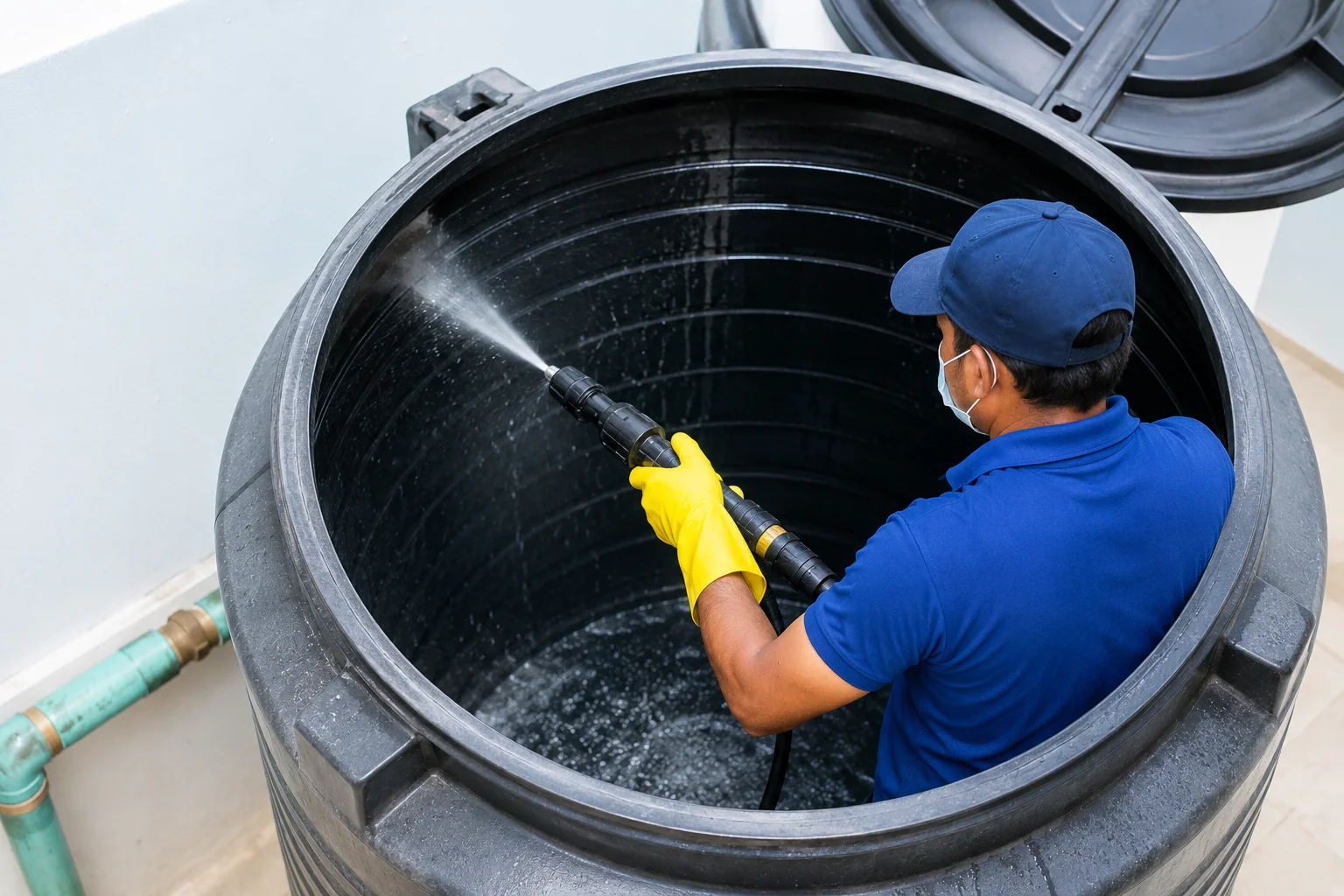
Building Water Tank Cleaning in Dubai With Minimal Disruption to Residents
When a building's tanks are cleaned, everyone notices if it goes wrong: no water for hours, discoloured taps and complaints at reception. We plan building tank cleaning so residents and tenants barely notice, and you get a clean, documented result.
In short: Best Fix Prime provides building water tank cleaning in Dubai for residential towers, apartment blocks, offices, hotels, schools and commercial buildings. We clean large and compartmented tanks one section at a time, or overnight, to keep water flowing, provide notice wording for residents, check pumps and valves, and supply photos and a condition report for your maintenance records. Call or WhatsApp +971 50 108 4133.
Building water tank cleaning in Dubai is a different job from cleaning a villa tank. Tanks are larger, often built into basements or roofs, and may be divided into compartments. Hundreds of people may depend on them. Water cannot simply be turned off for a day. Facility managers need the work planned, communicated and documented, and they need a contractor who turns up when agreed and finishes on time. This page explains how we approach building tanks and what you can expect from us.
Which buildings do we clean tanks for?
| Building type | Typical tank set-up | Main constraint |
|---|---|---|
| Residential tower | Basement or ground tanks plus roof tanks, booster pumps | Keeping water to hundreds of residents |
| Low-rise apartment block | Ground tank and roof tanks | Short notice periods for residents |
| Office building | Basement or roof tanks | Working hours and washroom use |
| Hotel or serviced apartments | Large compartmented tanks | Guests cannot lose water |
| School or nursery | Ground and roof tanks | Term times and child safety |
| Clinic or healthcare premises | Smaller dedicated tanks | Patient hours and hygiene expectations |
| Warehouse or labour accommodation | Ground and overhead tanks | Shift patterns and high demand |
How do we keep water running while tanks are cleaned?
Most larger building tanks are divided into two or more compartments, or the building has more than one tank. That allows one compartment to be isolated, drained and cleaned while the others keep supplying the building. Once the first compartment is cleaned, disinfected and refilled, it is returned to service and the next one is started. Residents may notice slightly lower pressure at peak times, but they keep their water.
Where a building has a single, undivided tank, the work is planned for the quietest period, usually overnight, and the shutdown is kept as short as possible. Notices go out well in advance so residents can store water. Where possible, the roof tanks are kept full during the ground tank clean, giving the building a buffer.
How do we clean building tanks step by step?
Site survey
We inspect the tanks, compartments, access points, pumps and valves, and agree the scope with the building or facilities manager.
Plan the supply
Compartments are cleaned one at a time, or work is scheduled overnight, so residents and tenants keep their water wherever possible.
Notify occupants
We provide notice wording for residents or tenants, with dates, times and what to expect.
Isolate and drain
The compartment or tank is isolated, drained and made safe for entry.
Clean and disinfect
Sludge is removed, walls and floors scrubbed, surfaces disinfected and rinsed.
Return to service
The tank is refilled, valves restored, pumps checked and the next compartment started.
Document
The building receives photos, a condition report and a record of the clean for its maintenance files.
How are residents and tenants informed?
Good communication prevents most complaints. Before the clean, we provide the building with notice wording that explains the date, the expected times, whether water will be off or simply reduced, what residents should do to prepare and who to contact with questions. After the clean, a short follow-up note advises residents to run their taps for a few minutes. Building management can share these through notice boards, apps, email or lift screens, whichever the building uses.
What do building managers receive after the clean?
Facility managers need records, not just a clean tank. After every building tank clean, you receive photos of each tank or compartment before and after cleaning, the date and scope of work, the condition of walls, floors, joints, access covers, vents and overflows, the state of float valves, inlet and outlet valves and booster pumps, and a list of recommended repairs with priorities. These reports can be filed with your building maintenance records and shared with owners associations or landlords.
What do large basement and ground tanks need?
Basement and ground tanks in buildings are often concrete, large and deep, with access through a manhole or hatch. They are confined spaces, so entry and cleaning follow strict safety procedures: the tank is drained and ventilated, a team member stays outside throughout and safe access is set up before anyone enters. Sludge in large tanks can be deep and is pumped out before scrubbing. Concrete walls and joints are inspected for cracks and leaks while the tank is empty.
What do building roof tanks need?
Roof tanks on buildings are often GRP sectional tanks, sometimes several linked together. They are exposed to sun and dust, and their lids, vents and panel joints need regular checks. Access may involve service ladders, roof hatches and plant rooms, which we coordinate with building security. Each roof tank is isolated, cleaned and returned to service in turn, so upper floors keep water while the work goes on.
Do you check booster pumps and valves?
Yes. Buildings rely on transfer and booster pumps, float valves, level controls and isolation valves to keep water moving. While tanks are drained, we check that valves open and close properly, float valves shut off at the right level and pumps run without leaks or unusual noise. Faults are noted in the report. Our plumbing team can carry out repairs, or we can share the findings with your existing pump maintenance contractor.
How often should building tanks be cleaned?
Many buildings follow a routine of cleaning tanks at least once or twice a year, and some clean more often where tanks are older, exposed to heat or serve a large number of people. Your building may already have a set schedule. We can work to that schedule, remind you when the next clean is due and keep the reports in order so you always know when each tank was last cleaned.
Can tank cleaning be part of a building maintenance contract?
Yes. For building owners and managers, including tank cleaning in a commercial maintenance contract means it is scheduled, carried out and documented without needing separate bookings each time. It can sit alongside AC maintenance, plumbing and electrical services, giving you one contractor and one point of contact for several building systems.
What about hotels and serviced apartments?
In hotels and serviced apartments, guests should never notice that tanks are being cleaned. Work is planned around occupancy, compartments are cleaned one at a time to keep supply constant, and all activity in plant rooms and on roofs is kept away from guest areas. We coordinate closely with engineering and housekeeping teams so pressure and hot water are maintained throughout.
What about schools, nurseries and clinics?
For schools and nurseries, tank cleaning is ideally scheduled during holidays or weekends, when the building is empty and water use is low. For clinics, it is scheduled outside patient hours. In each case, the water is flushed through after refilling so the first users of the day receive fresh water. Reports and photos can be shared with management and parents' committees where needed.
How do we work with building security and access rules?
Commercial and residential buildings usually require contractors to register in advance, provide worker details, use specific entrances and service lifts and work within set hours. Some ask for method statements before work in plant rooms or on roofs. We provide the documents building management typically asks for and plan the work within your rules, so there are no delays at the security desk.
What common problems do we find in building tanks?
- Heavy sludge in basement tanks that have not been cleaned on schedule
- Cracked concrete or failed joints letting water seep in or out
- Access covers that do not seal, allowing dust and insects in
- Vents and overflows without insect screens
- Float valves that stick, causing overflows or low levels
- Corroded ladders, brackets and fittings inside tanks
- GRP panel joints weeping on roof tanks
How do you handle complaints about discoloured water?
Building managers often first hear about tank problems through complaints: brown water in the morning, grit in shower heads, a musty smell or residents asking whether the water is safe. When complaints come in, we can carry out an inspection of the tanks to see whether sediment, biofilm or a damaged cover is the likely cause, and recommend a clean and disinfection. After the clean, a short note to residents explaining what was done, with a photo or two, helps rebuild confidence. If complaints continue, the issue may be in the building pipework or risers, which our plumbing team can investigate.
What about tanks that have not been cleaned for years?
It is not unusual for a building to take on a new management company and find that the tanks have no cleaning records. Tanks that have gone years without cleaning often have deep sludge, heavy biofilm and corroded internal fittings. The first clean takes longer and may need extra disinfection. We document the condition carefully, which gives the new management a clear baseline and evidence of the work done, and then set a regular schedule so the problem does not build up again.
How do owners associations use tank cleaning reports?
In jointly owned buildings, owners associations and their managers need to show owners that common services are maintained properly. Tank cleaning reports with dated photos are a simple way to do that. They can be included in maintenance updates, general assembly packs or shared on owner portals. A history of reports also helps when planning budgets for tank repairs or replacement, because it shows how the tanks have changed over time.
Can you clean tanks across several buildings?
Yes. Property management companies and owners with several buildings can schedule tank cleaning across their portfolio as one programme. Buildings are grouped by area and timing, and each receives its own report. A single contact on our side keeps track of the whole programme, sends reminders when cleans are due and provides a summary of findings across the portfolio, which makes planning repairs easier.
How do you protect plant rooms and common areas?
Building tank cleaning involves hoses, pumps and sludge passing through plant rooms, car parks and sometimes service corridors. We protect floors along the route, keep hoses tidy and clearly marked to avoid trip hazards, direct drained water to suitable drains and collect sludge for removal. Common areas used by residents are kept clear, and everything is cleaned before we leave. Building security is informed of our route and timings in advance.
What happens if a tank needs repair before it can be cleaned?
Occasionally, a tank is found to have a serious problem, such as a broken access cover that is unsafe to open, a leaking joint flooding the plant room or internal ladders too corroded to use safely. In those cases, we make the area safe, document the issue and agree a plan with the building manager. Minor repairs may be done on the spot, while major repairs are quoted and scheduled before or alongside the clean.
What do tenants in commercial buildings expect?
Office tenants, retailers and clinic operators expect washrooms and pantries to work throughout the working day. If a tank clean interrupts water during business hours, complaints follow quickly. For commercial buildings, we usually schedule building water tank cleaning in Dubai for evenings, weekends or public holidays, and keep at least one compartment or tank in service. Tenants receive clear notice of any expected effect, even if it is only a short period of lower pressure.
How long does a building tank clean take?
It depends on the number and size of tanks and compartments. A low-rise building with one ground tank and a couple of roof tanks can often be completed in a day. A tower with large compartmented basement tanks and several roof tanks may take two or more days, cleaned in stages so supply continues. The survey gives us the detail needed to give you an accurate timeline and to plan resident notices around it.
What safety measures are in place for the team?
Large building tanks involve confined spaces, deep water, slippery surfaces and work at height on roofs. Our team follows safe working procedures for each: tanks are fully drained and ventilated before entry, a team member stays at the access point throughout, suitable access is set up and equipment is checked before use. On roofs, edges and hatches are managed carefully. Safety is planned before the work starts, not improvised on the day.
Can you help plan tank upgrades or replacement?
Yes. Over several cleans, the reports build up a clear picture of how each tank is ageing. When a tank reaches the point where repairs are no longer cost-effective, such as a GRP tank with repeated joint leaks or a concrete tank with widespread cracking, we can advise on options, including relining, panel replacement or a new tank, and help you plan the work to keep supply running.
What should building managers prepare?
- Plans or details of tank locations, sizes and compartments if available
- Access to plant rooms, roofs and basement hatches
- Contractor registration with security and any required documents
- Agreement on dates and times that suit occupants
- Notices sent to residents or tenants in good time
- A contact person on site during the work
Do residents need to do anything after the clean?
Only a little. Each apartment or unit should run its taps and showers for a few minutes once the tanks are back in service, to clear old water sitting in the internal pipes. Residents with water filters may want to change the cartridge. If anyone notices discoloured water that does not clear after flushing, they should let building management know, so it can be checked and, if needed, traced back to the building risers or the apartment's own pipework.
Why choose Best Fix Prime for building tanks?
We plan around your occupants, communicate clearly and document everything. Compartments are cleaned in turn so the building keeps its water, safety procedures are followed for confined spaces and every job ends with a clear report. Because we also provide plumbing, AC and electrical services, we can help with the repairs we find. Building water tank cleaning in Dubai with us is delivered by a team used to working in occupied buildings, where residents and tenants come first.
Pricing depends on the number, size and type of tanks, the number of compartments, access to basements and roofs, the amount of sludge, any overnight or out-of-hours working and any repairs needed. Building jobs are quoted after a site survey, and we can provide a fixed price per clean for buildings that want a regular schedule.
Water tank cleaning for other properties
Arrange a building tank survey
Tell us the building type, the number and approximate size of tanks and your preferred timing. Call or WhatsApp +971 50 108 4133, or use the form at the top of the page. The survey is where the planning happens. We look at every tank and compartment, the access routes, the pumps and valves and any building rules on contractor hours. You then receive a written quote, a proposed schedule that keeps water flowing and draft notice wording for residents or tenants. If your building already has a cleaning schedule, we will work to it and take over the reminders.
Best Fix Prime (Bestfix Prime Technical Services LLC)
AddressRoom 201, 3rd Avenue by Ya Building, Street 27, Mirdif, Dubai, United Arab Emirates
Call and WhatsApp+971 50 108 4133
Emailinfo@bestfixprime.ae
HoursOpen 24 hours, 7 days a week
Frequently asked questions
What does building water tank cleaning in Dubai include?
Building water tank cleaning in Dubai with us includes surveying, scheduling, resident notices, draining, sludge removal, scrubbing, disinfection, pump and valve checks and a written report.
Will residents lose water during the clean?
Usually not. Compartments are cleaned one at a time so the building keeps its supply.
What if our building has only one tank?
The clean is planned for the quietest period, usually overnight, with advance notice to residents.
Do you provide notices for residents?
Yes. We supply notice wording with dates, times and preparation advice.
Do you supply reports for our records?
Yes, with photos, condition notes and recommended repairs.
How often should building tanks be cleaned?
Many buildings clean at least once or twice a year. We can work to your schedule.
Do you clean basement tanks safely?
Yes, following confined-space procedures with ventilation and a team member outside.
Do you check booster pumps?
Yes, along with float valves, level controls and isolation valves.
Can you clean tanks in hotels?
Yes, compartment by compartment, coordinated with engineering teams so guests are unaffected.
Can you clean school tanks during holidays?
Yes. Holidays and weekends are ideal for schools and nurseries.
Do you provide documents for building security?
Yes, including worker details and method statements where required.
Can tank cleaning be included in a building AMC?
Yes, alongside AC, plumbing and electrical maintenance.
Do you clean GRP roof tanks on towers?
Yes, isolating each tank so upper floors keep water.
What if you find cracks in the tank?
They are photographed and reported with recommended repairs.
Can you work overnight?
Yes, where the building allows and the tank set-up requires it.
Do you clean tanks in labour accommodation?
Yes, scheduled around shifts and high-demand periods.
Can you give a fixed price for regular cleans?
Yes, after an initial survey.
Do you remove the sludge from the building?
Yes. Sludge is pumped out and disposed of responsibly.
Should residents run their taps afterwards?
Yes. A short flush clears old water from apartment pipes.
How do I arrange a building tank survey?
Call or WhatsApp +971 50 108 4133 with your building details.