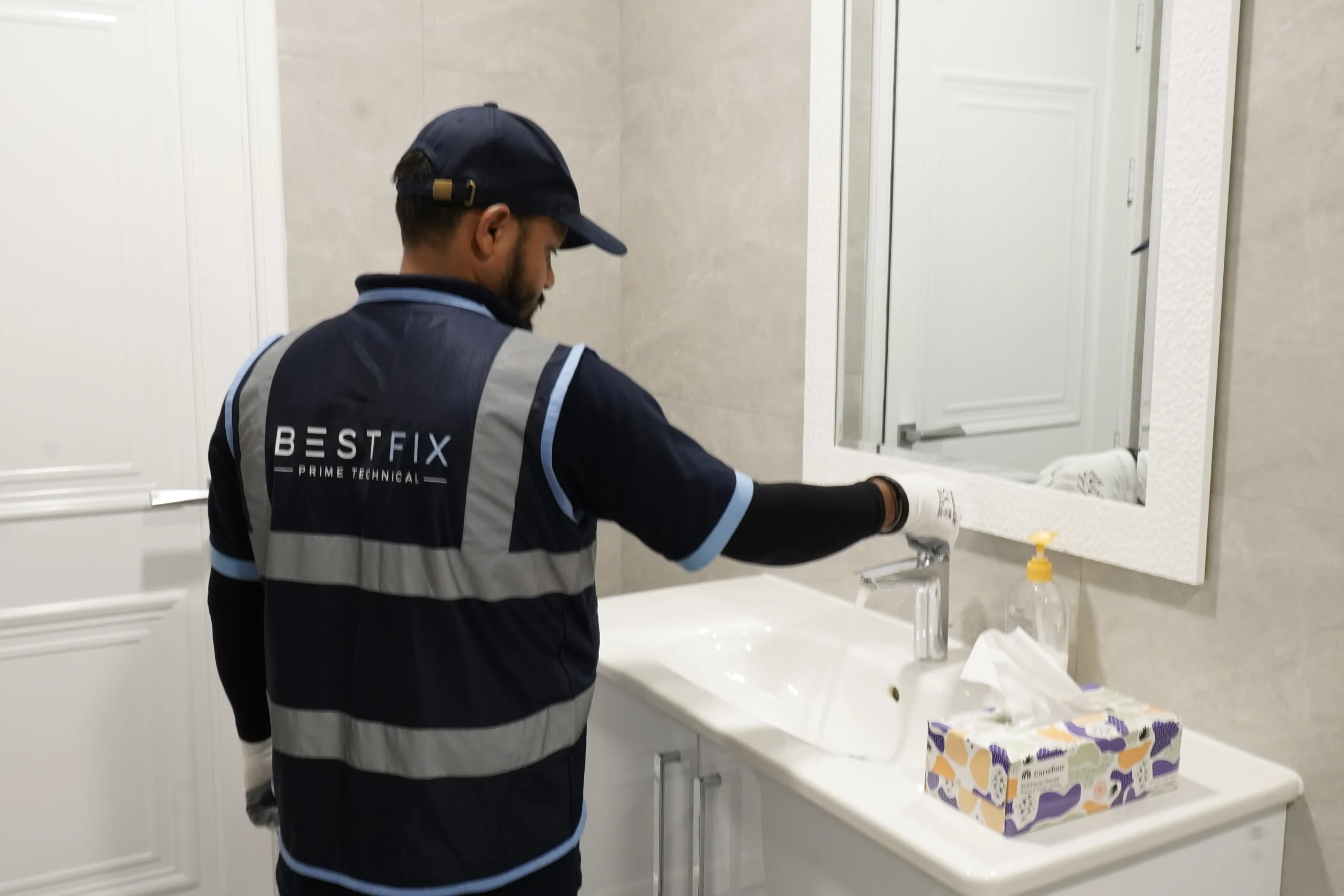
Water Leak Repair in Dubai: Find Hidden Leaks Before They Spread
Not every leak announces itself with a drip. Many sit quietly inside walls and floors for weeks, showing up only as a stain, a smell or a bill that does not make sense. We find them and fix them with as little disruption as possible.
In short: Best Fix Prime provides water leak repair in Dubai for slow and hidden leaks inside walls, floors, ceilings, bathrooms and kitchens. We use meter checks, isolation tests and moisture readings to pinpoint the leak before opening anything, repair the faulty pipe, joint, seal or valve, then make good the wall or ceiling. Ideal for damp patches, musty smells and rising water bills. Call or WhatsApp +971 50 108 4133.
Most leaks we are asked to find are not dramatic. There is no water pouring from the ceiling, just a patch of paint that has started to bubble, a skirting board that has swollen, a corner of the bathroom that always smells damp, or a water bill that has crept up for three months in a row. Water leak repair in Dubai is often detective work first and plumbing second. Finding the exact point of a hidden leak, without tearing up half a bathroom to do it, is where most of the skill lies.
This page explains the signs of a hidden leak, where leaks usually hide in Dubai homes, how we find them with as little damage as possible, how they are repaired and what happens to walls and ceilings afterwards. If water is coming through right now and you cannot stop it, call our emergency line instead.
What are the signs of a hidden water leak?
- Paint bubbling, flaking or turning yellow or brown on a wall or ceiling
- Grout or silicone around a shower or bath that stays dark and never dries
- A musty, earthy smell in one room or cupboard
- Skirting boards, door frames or kitchen plinths swelling or crumbling
- Tiles that sound hollow or have started to lift
- Mould spots appearing in the same place after cleaning
- Water bill rising with no change in how you use water
- The water meter moving when every tap and appliance is off
- Warm patches on a floor near a hot water pipe
One sign on its own may have another explanation, such as condensation or a past leak that has already been fixed. Two or more together, especially with a rising bill, usually mean water is escaping somewhere you cannot see.
How can you check for a leak yourself using the water meter?
The meter test is the simplest way to confirm a supply leak. Turn off every tap, shower, toilet fill and appliance in the home, and make sure nobody uses water during the test. Note the reading on the meter, or take a photo of it, then wait about an hour. If the reading has changed, water is going somewhere. A toilet that is quietly running into the bowl is the most common culprit, so check those first by listening for refilling or placing a little food colouring in the cistern and seeing if it appears in the bowl without flushing. If the toilets are fine and the meter still moves, there is very likely a leak on the supply pipework.
Note that the meter test only finds leaks on pressurised supply pipes. Leaks from waste pipes, shower trays and drains only happen when water is being used, so they will not show on the meter. For those, the pattern of when the damp gets worse is the better clue.
Where do hidden leaks usually start in Dubai homes?
| Location | Common cause | Typical sign |
|---|---|---|
| Shower and bath areas | Failed grout, silicone or tray seal letting water under tiles | Damp wall on the other side, darkened grout, hollow tiles |
| Behind concealed cisterns | Loose inlet or flush valve connection inside the wall | Damp patch below the flush plate, rising bill |
| Under kitchen and basin cabinets | Weeping trap, hose or valve | Swollen cabinet base, musty smell |
| Inside walls | Pinhole in a pipe or a failed joint | Spreading damp patch at one height, bubbling paint |
| Under floors | Leaking supply or waste pipe in the screed | Lifting tiles, damp skirting, warm floor on hot lines |
| Around water heaters | Valve or fitting weeping slowly | Stains on the ceiling or cupboard below |
| Villa external walls | Garden tap, irrigation or buried pipe leak | Damp at the base of a wall, soft ground |
How do we find a hidden leak without breaking walls?
Gather the clues
We ask when the damp appeared, whether it changes with water use, AC use or the time of day, and what your water bill has been doing.
Meter and isolation tests
With every tap off, the water meter is watched for movement. Sections of the system are then isolated one by one to narrow the search.
Moisture mapping
Moisture readings across walls, floors and ceilings show where the water is spreading and where it is strongest.
Pinpoint before opening
Only once the likely point is confirmed is a small, targeted opening made, if one is needed at all.
Repair the fault
The failed joint, pipe, seal, trap or valve is repaired or replaced and tested under pressure.
Dry, close and make good
Openings are closed once the area has dried, and walls or ceilings are repaired and repainted.
The aim is always to make the smallest possible opening, in the right place, the first time. Guessing and opening several sections of wall is how a small leak becomes a major renovation. Careful testing at the start saves time, mess and money at the end.
Why shower leaks are the most common hidden leak
Showers get wet every day, and the barrier that keeps water out of the wall is surprisingly thin: grout, silicone and a waterproof layer underneath the tiles. Over time, grout cracks, silicone shrinks and peels, and water finds its way behind the tiles. It does not drip out; it soaks into the wall and the floor, often showing up on the other side of the wall in a bedroom or corridor. In older bathrooms, the waterproofing under the tiles may also have failed.
The good news is that many shower leaks can be fixed without retiling. Removing failed silicone and resealing, regrouting the affected area or sealing around the mixer and shower valve often stops the leak. Where the tray or waterproofing has failed, more work is needed, and the plumber will explain the options.
What about leaks from concealed cisterns?
Concealed cisterns are common in Dubai apartments and villas. They look clean and modern, but because the cistern sits inside the wall, a leak inside it is invisible. Water may run from a loose inlet connection or a worn flush valve straight into the wall cavity, appearing as a damp patch below the flush plate or on the other side of the wall. In most cases, the cistern can be reached through the flush plate opening, and the faulty valve or seal replaced without opening the wall at all. Our toilet repair page covers this in more detail.
How are leaking pipes inside walls repaired?
Once the exact point is confirmed, a small section of wall or tile is opened to reach the pipe. The damaged section or failed joint is cut out and replaced with new pipe and fittings suited to the existing system. The repair is pressure tested before anything is closed. If the pipe shows corrosion or damage beyond the leak point, the plumber will tell you, because patching one point on a failing run of pipe often leads to another leak nearby. In that case, our pipe repair and replacement service may be the better long-term answer.
How are leaks under floors handled?
Floor leaks are the most disruptive to repair, so finding them accurately matters even more. Signs include tiles lifting or sounding hollow, damp skirting boards along one wall and, on hot water lines, a warm patch on the floor. The plumber narrows the location with isolation tests and moisture readings before lifting the smallest number of tiles possible. Where a floor pipe is badly corroded or keeps failing, rerouting the pipe through a wall or ceiling can sometimes be a cleaner solution than digging up the floor again.
Is it a leak or condensation?
In Dubai, condensation is often mistaken for a leak. Cold water pipes, AC ducts and AC drain lines can sweat heavily in humid weather, leaving damp patches on ceilings and walls. Bathrooms without good ventilation also collect moisture on walls and ceilings. Condensation damp tends to come and go with the weather and AC use, and often appears near AC units or along cold pipe runs. A plumbing leak tends to be more constant or linked to water use. Our technicians check for both, because the fix is very different: insulation and ventilation for condensation, a plumbing repair for a leak.
Who pays for a leak in an apartment building?
Responsibility depends on where the leak is and the terms of your tenancy or ownership. Leaks inside your unit, on pipes and fixtures that serve only you, are usually the responsibility of the owner or tenant depending on the contract. Leaks from shared risers, common areas or another unit are usually down to the building or the neighbour. A clear written report of where the leak was found and what was repaired helps settle these questions. We provide that report with photos after every leak repair.
What happens to walls and ceilings after the leak is fixed?
Water that has soaked into a wall or ceiling needs time to dry before it is closed and repainted. Painting too early traps moisture, and the stain comes back within weeks. Depending on how wet the area is, drying can take from a few days to a couple of weeks, helped by ventilation and the AC. Badly damaged gypsum or plaster is usually replaced. Once dry, our maintenance and painting teams can close openings, repair surfaces and repaint so the repair cannot be seen, using a stain-blocking primer where water marks were present.
What happens if a hidden leak is left?
A slow leak does damage that is out of proportion to the amount of water. It weakens plaster and gypsum, rots wooden cabinets and door frames, lifts tiles, corrodes metal fixings and encourages mould. In apartments, it can reach the unit below and lead to disputes. It also wastes water every hour of every day. The longer a hidden leak runs, the larger the area that will need repairing once it is finally found, which is why early water leak repair in Dubai is almost always cheaper than waiting.
How can you reduce the risk of hidden leaks?
- Reseal showers and baths when silicone starts to peel or darken
- Regrout areas where grout has cracked or washed out
- Replace flexible hoses under sinks and on appliances every few years
- Fix a running toilet straight away, rather than living with it
- Check under sinks and around water heaters for damp when cleaning
- Do a meter test every few months, or whenever the bill jumps
How do kitchen leaks hide inside cabinets?
Kitchen cabinets are one of the easiest places for a leak to go unnoticed. The space under the sink is usually packed with cleaning products and bins, so a slow drip from a trap, a hose or a filter connection can run for weeks before anyone looks. The water soaks into the cabinet base, which swells and starts to crumble, and often runs under the plinth along the floor. Dishwasher and washing machine connections behind the units can do the same. If you notice a musty smell when you open the cabinet, or the cabinet base feels soft, empty it and look closely with a torch. Our plumbers repair the connection, check the others nearby and advise whether the cabinet base needs replacing.
How are hot water pipe leaks different?
Leaks on hot water pipes can be harder to spot because the water often evaporates before it shows as a wet patch. The clues are different: a warm spot on the floor or wall, a water heater that seems to run more than usual, higher electricity use and a meter that moves slowly with taps off. Hot water lines also expand and contract more than cold ones, which puts extra strain on joints. When we suspect a hot water leak, we isolate the heater and its pipework first to confirm it, before moving on to locate the exact point.
What do you need to tell us before a leak visit?
- Where the damp, stain or smell is, with photos
- How long you have noticed it and whether it is getting bigger
- Whether it changes when you shower, run taps or use the AC
- Whether your water bill has gone up, and by roughly how much
- Any recent plumbing work, renovations or new fixtures nearby
- Whether the neighbour above or below has reported anything
These details often point straight to the likely source, which means less testing time on site and a faster water leak repair in Dubai.
Can a leak come back after it has been repaired?
A properly repaired joint or pipe section should not leak again. When damp returns after a repair, it is usually for one of three reasons: there was more than one leak, the wall was closed and painted before it had dried, or the original repair only treated the symptom. That is why we test the whole area around the leak, not just the obvious point, and why we wait for walls to dry before making good. If damp does return, tell us and we will come back to check it.
Why choose Best Fix Prime for leak repair?
We take the time to find the leak properly before opening anything, explain what we find in plain language and give you photos and a report. Because we also cover AC, electrical and painting work, we can deal with AC condensation issues, make nearby electrics safe and restore walls and ceilings afterwards, without you having to bring in other companies. We work across the whole of Dubai and give you the price before the repair starts.
The cost depends on how long it takes to find the leak, where it is, how much access is needed and what has to be repaired. A leaking trap under a sink is a quick job. A pinhole leak in a pipe inside a tiled wall involves detection, opening, repair and making good. We explain each stage and its cost before starting. Finding the leak accurately first is what keeps the overall bill down, because it avoids unnecessary opening and repeat visits.
Other plumbing services that pair with leak repair
Book a leak investigation
Send us photos of the damp area and tell us how long it has been there and whether your water bill has changed. Call or WhatsApp +971 50 108 4133, or use the form at the top of the page.
Best Fix Prime (Bestfix Prime Technical Services LLC)
AddressRoom 201, 3rd Avenue by Ya Building, Street 27, Mirdif, Dubai, United Arab Emirates
Call and WhatsApp+971 50 108 4133
Emailinfo@bestfixprime.ae
HoursOpen 24 hours, 7 days a week
Frequently asked questions
What does water leak repair in Dubai include?
Water leak repair in Dubai with us includes testing to locate the leak, targeted access, repair of the pipe, joint, seal or valve, and making good the wall or ceiling.
Which signs point to a leak hidden inside a wall?
Bubbling paint, musty smells, swollen skirting, hollow tiles and a rising water bill are the common signs.
How do I do a water meter leak test?
Turn off all water use, note the meter reading, wait an hour without using water and check if it has moved.
Can you find a leak without breaking the wall?
We narrow it down with meter, isolation and moisture tests first, so only a small, targeted opening is made if needed.
Why is the wall next to my shower damp?
Usually failed grout, silicone or waterproofing letting water behind the tiles, or a leak at the mixer.
Can a shower leak be fixed without retiling?
Often, yes, by resealing, regrouting or sealing around the mixer. Failed waterproofing needs more work.
Why is there a damp patch below my flush plate?
A leak inside a concealed cistern. It can usually be fixed through the flush plate opening.
Is it a leak or condensation?
Condensation comes and goes with humidity and AC use. A leak is more constant or linked to water use. We check for both.
Why is my water bill so high?
A running toilet or a hidden supply leak are the most common causes.
How long does a wet wall take to dry?
From a few days to a couple of weeks, depending on how wet it is and the ventilation.
Do you repaint after fixing a leak?
Yes. Once dry, our teams close openings and repaint, using a stain-blocking primer where needed.
Who pays for a leak in my apartment?
It depends on where the leak is and your contract. Our written report helps settle it.
Can a leak under the floor be fixed?
Yes. We locate it accurately and lift as few tiles as possible, or reroute the pipe where that is cleaner.
Do you give a report after a leak repair?
Yes, with photos of the source and the repair.
What if the leak is from my neighbour?
We confirm it is not from your unit and provide a report you can share with the neighbour and building.
Can a hidden leak cause mould?
Yes. Damp walls and cabinets in Dubai's warm conditions encourage mould within days.
Do you check for leaks in villas?
Yes, including external walls, garden taps, irrigation lines and buried pipes.
Is a slow leak urgent?
It is not usually an emergency, but it should be fixed soon, as damage grows the longer it runs.
What if water is pouring right now?
Turn off the main valve and call our 24/7 emergency line.
How do I book a leak investigation?
Call or WhatsApp +971 50 108 4133 with photos of the damp area.