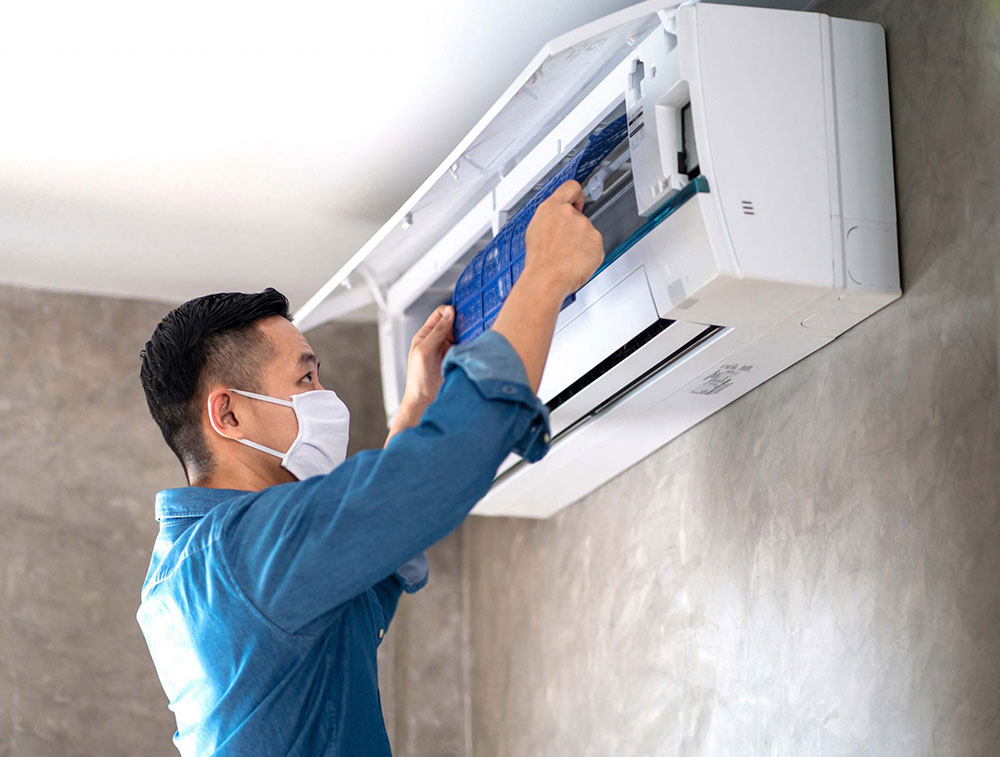
AC Installation in Dubai, Planned and Fitted Properly
New units for new homes, fit-outs, extensions and rooms that have never had cooling, installed to a standard that keeps them running quietly and efficiently for years.
In short: Best Fix Prime provides AC installation in Dubai for new homes, office and shop fit-outs, extensions and rooms that have no cooling. We plan the unit positions, fit split, ducted or cassette units with neat insulated pipework and a properly sloped drain, pressure test and vacuum the system, and commission it before handover. Installation is available across Dubai on +971 50 108 4133.
An air conditioner is only as good as the way it is installed. Two identical units can perform completely differently depending on where they are mounted, how the pipes are run and whether the system was vacuumed properly before it was switched on. Many of the leaks, noises and early breakdowns we are called to fix trace back to an installation that was rushed. That is why we treat AC installation in Dubai as skilled work, not a box-fitting exercise.
This page is about fitting air conditioning where there was none before, or adding units to a property. If you are swapping out an old system, our AC replacement pages cover that in detail. Here, you will find how we plan an installation, the standards we work to, the choices you will need to make and what to expect on the day.
When do you need a new AC installation?
Installation, as opposed to replacement, usually comes up in situations like these:
- A newly built villa or townhouse that needs cooling throughout
- An office, shop, clinic or restaurant fit-out
- A room that has never had its own AC, such as a maid's room, store room or study
- An extension, converted garage, majlis or roof terrace room
- A room that has been split into two, leaving one side without cooling
- Adding a unit to boost cooling in a large open space that one AC cannot handle
How do we plan an AC installation?
Good installations are decided before the drill comes out. During the site visit, our technician looks at the room size and use, where the sun hits, where the indoor unit will sit, where the outdoor unit can go, how the pipes will travel between them, where the condensation will drain to and where the power will come from. Each of those choices affects how well the AC works and how easy it is to service later.
You get a clear plan and quote showing the positions, the pipe route and what is included, so you can agree everything before work begins.
Where should the indoor unit go?
For a wall-mounted split, the indoor unit should be high on a wall where it can blow air across the room without hitting obstacles, ideally not directly over a bed or a desk where the airflow will be uncomfortable. It needs clearance above for air intake and to the sides for servicing. It also needs a sensible route to an outside wall for the pipes and drain, because every extra bend and metre affects the installation.
Ducted and cassette units are planned around the ceiling: available void depth, structure, access panels and where supply and return grilles will give even airflow through the space.
Where should the outdoor unit go?
The outdoor unit's job is to throw heat away, so it needs free air around it. In Dubai, a position with some shade and good ventilation helps it work less hard. The things we look for:
- Clear space in front and behind for airflow, away from corners that trap hot air
- Shade where possible, without enclosing the unit in a box or cabinet
- A secure wall bracket or ground stand rated for the unit's weight
- Safe access for future servicing, without needing to climb over railings
- Distance from bedroom windows and neighbours to limit noise
- Compliance with building or community rules on where units can go
What standards do we follow when installing?
These are the details that separate an installation that lasts from one that causes problems:
Plan the positions
Indoor and outdoor unit positions, pipe route, drain point and power supply are agreed with you before any drilling.
Mount the indoor unit
The mounting plate is fixed level with the correct fall towards the drain, and the wall core is drilled at the right angle.
Mount the outdoor unit
The outdoor unit goes on a secure bracket or stand with clearance for airflow and access for future servicing.
Run pipes, drain and cable
Insulated copper pipes, the drain pipe and interconnecting cable are run neatly, with the drain kept on a continuous downward slope.
Pressure test and vacuum
Joints are pressure tested with nitrogen, then the system is vacuumed to remove air and moisture.
Connect power
The unit is connected to a suitable supply with an isolator positioned for safe servicing.
Commission and hand over
Valves are opened, the system is run and checked, and you are shown how to use the controls before we clean up.
Why do vacuuming and pressure testing matter so much?
When pipes are connected, the system is full of air, and air carries moisture. Left inside, moisture reacts with refrigerant and oil to form acids that slowly attack the compressor, and air takes up space the refrigerant needs, reducing cooling. Pulling a deep vacuum removes both. Pressure testing with nitrogen first confirms every joint is sealed, so the refrigerant stays where it belongs.
Skipping these steps saves twenty minutes on installation day and often costs a compressor a few years later. We never skip them.
How are pipes and drains run neatly?
Exposed pipework running across a wall is one of the most common complaints about AC installations. Where possible, we route pipes through the wall directly behind the indoor unit. Where they have to run along a wall, we use trunking to give a tidy finish that can be painted to match. Pipes are fully insulated along their length, both to protect cooling performance and to stop condensation dripping from the outside of the pipe.
The drain pipe is run with a continuous fall to a proper discharge point, such as a balcony drain or an outside wall, so water never sits in the pipe or drips onto a neighbour's balcony.
Which type of unit should you install?
| Unit type | Good for | Worth knowing |
|---|---|---|
| Wall-mounted split | Individual rooms, smaller offices | Quickest to install, one outdoor unit per indoor unit in most setups |
| Ducted or concealed | Villas, larger apartments, multi-room spaces | Hidden unit with grilles, needs ceiling void and planning |
| Ceiling cassette | Shops, restaurants, open-plan offices | Spreads air in several directions, usually needs a condensate pump |
| Floor-standing | Large open areas, majlis rooms, showrooms | High capacity in one unit, needs floor space |
We recommend the type that suits the space and how you use it, and explain the trade-offs so the decision is yours.
Can one outdoor unit serve several rooms?
Yes, with a multi-split system. One outdoor unit connects to two or more indoor units in different rooms, which saves space on balconies and facades where only one outdoor position is allowed. The trade-off is that all the indoor units depend on one outdoor unit, so a fault there affects every room, and the system needs careful sizing. For apartments with limited outdoor space, multi-split is often worth considering, and we will explain whether it suits your layout.
How do you reduce noise from a new AC?
Noise is mostly a matter of choosing positions and fitting carefully. Indoor units should be mounted firmly on a level plate so they do not vibrate against the wall. Outdoor units sit on brackets or stands with anti-vibration pads, away from bedroom windows and shared walls where possible. Inverter units, which slow down once the room is cool, tend to run more quietly overall. If noise is a particular concern, for example in a bedroom or a clinic consulting room, tell us during the survey and we will plan around it.
What are the most common AC installation mistakes?
Many of the faults we repair started on installation day. The ones we see most often:
- Indoor units mounted level or tilted the wrong way, so water drips from the front
- Drain pipes with dips that hold water and grow slime
- No vacuum before opening the valves, leaving moisture in the system
- Flare joints made in a hurry, which slowly leak refrigerant
- Pipe insulation missing outdoors, where the sun destroys it quickly
- Outdoor units boxed into corners or cabinets with no airflow
- Undersized cables or no local isolator for safe servicing
Every one of these is avoidable, and each is checked on our installations before handover.
Can AC be installed on high floors and balconies?
Yes, but it needs planning. On towers, outdoor units usually go on balconies or designated plant ledges, and building rules often say exactly where. Lifting units to the right floor, protecting lifts and common areas, and working safely at height all need arranging in advance with building management. Our technicians are used to high-rise installations and handle the coordination as part of the job.
What about small rooms such as a maid's room or store room?
Small rooms are often forgotten during the original build and end up being the hottest in the home. A compact split unit is usually the answer, sized for the room rather than oversized, which would cool too quickly and leave the space damp. Because these rooms are often internal or have awkward walls, planning the pipe and drain route is the main challenge, and we look at options such as routing through an adjacent room or the ceiling.
Why does AC installation in Dubai need heat-aware planning?
Equipment that works comfortably in milder climates is pushed hard here. Outdoor units sit in direct sun on roofs and balconies, pipe insulation degrades under UV, and systems run for months without a break. Planning for that, with sensible sizing, shaded and ventilated outdoor positions, UV-protected insulation and secure mounting, is what makes AC installation in Dubai last. It is less about the brand of unit and more about the care that goes into fitting it.
Can tenants have a new AC installed?
Usually, yes, but with the landlord's agreement. Drilling walls, adding outdoor units and running new electrical circuits all change the property, so most tenancy contracts and buildings require written permission first. Once approval is in place, we can carry out the installation and leave the landlord a clear record of what was fitted and where. If you move out later, the unit can often be removed and the wall made good, or left in place by agreement.
Do you need permission before installing an AC?
In many apartment buildings and gated communities, yes. Rules often cover where outdoor units can be placed, whether facades can be drilled, working hours and access to roofs or service areas. Some buildings also need to approve electrical changes. We can help you prepare what building management asks for and coordinate with them on access, but approval itself needs to come from the building, so it is worth checking early.
Does a new AC need electrical work?
Every AC needs a suitable power supply and a local isolator so it can be switched off safely for servicing. Adding a unit to a room without existing AC wiring, or installing a larger unit, may mean running a new circuit from the distribution board. Our technicians check the existing supply during the survey and, where electrical work is needed, our electricians carry it out as part of the job.
How long does AC installation take?
A single wall-mounted split unit on an accessible wall is usually installed within a few hours. Several units, long pipe runs, ducted systems in ceilings or cassette units in commercial spaces can take a day or more. Fit-outs are scheduled alongside other trades so the AC goes in at the right stage, typically before ceilings are closed and walls are painted.
How do we keep the mess down?
Drilling a wall core creates dust, so we cover furniture and floors beneath the work area and use dust collection when drilling. Offcuts, packaging, old fixings and any other debris are taken away with us, so nothing is left for you to clear. Any holes or marks around the installation are sealed and tidied, and the area is cleaned before we leave.
Can you install AC in a fit-out or new build?
Yes. For fit-outs and new builds, the AC plan needs to fit around the ceiling layout, lighting, sprinklers and other services. We can work from drawings, coordinate with the contractor on when pipework and drains should go in, and return later to fit and commission the units once the space is ready. Getting the AC involved early avoids awkward retrofits later, such as cutting into finished ceilings or running surface trunking across freshly painted walls because nobody planned the route.
What happens after installation?
Before we leave, you are shown how to use the remote or controller, how to clean the filters and what the servicing schedule should be. A new unit still needs regular care, and the first service is a good moment to check the installation has settled in well. Many customers add new units straight to a maintenance plan so servicing is never missed. If anything about the new unit does not seem right in the first few weeks, such as a drip, a new noise or a room that will not cool, tell us straight away so we can check it while the installation is fresh.
The main factors are the type and capacity of the unit, the length of pipe and cable between the indoor and outdoor units, the wall construction, whether trunking or concealed routing is needed, the outdoor unit position and any access equipment, electrical work to provide a supply, and whether a condensate pump is needed. After the site visit, you receive a quote covering all of it.
Related AC replacement services
Book an AC installation survey
Tell us the property type, which rooms need cooling and roughly how big they are. Photos of the room and where you would like the outdoor unit help us plan. WhatsApp or call +971 50 108 4133, or email info@bestfixprime.ae.
Best Fix Prime (Bestfix Prime Technical Services LLC)
AddressRoom 201, 3rd Avenue by Ya Building, Street 27, Mirdif, Dubai, United Arab Emirates
Call and WhatsApp+971 50 108 4133
Emailinfo@bestfixprime.ae
HoursOpen 24 hours, 7 days a week
Frequently asked questions
How long does AC installation in Dubai take?
A single split unit usually takes a few hours. Multiple units, ducted systems and commercial installs take a day or more.
Do you supply the AC unit or only install it?
We can supply and install. If you already have a unit, tell us the make and model and we will check whether it is suitable to install.
Where is the best place to install a split AC indoor unit?
High on a wall with clear airflow across the room, not directly over a bed or desk, with a short, direct route for pipes to an outside wall.
Where should the outdoor AC unit be placed?
Somewhere with free airflow, some shade if possible, safe access for servicing and distance from bedroom windows and neighbours.
Do I need building permission to install an AC?
Often, yes. Many buildings and communities have rules on outdoor unit positions, drilling and working hours. Check with building management early.
Can you hide the AC pipes?
Where possible, pipes go straight through the wall behind the unit. Otherwise, neat trunking that can be painted gives a tidy finish.
Why is vacuuming important during installation?
It removes air and moisture from the system, which would otherwise reduce cooling and damage the compressor over time.
Do I need a new electrical circuit for my AC?
Sometimes. It depends on the existing supply and the unit size. We check during the survey and our electricians can add a circuit if needed.
Can you install AC in a room without an outside wall?
Often yes, with a longer pipe route through ceilings or a ducted solution. We assess what is practical during the survey.
What size AC should I install?
It depends on room size, sun exposure, glazing, ceiling height and use. We calculate the right capacity during the survey.
Can you install AC in a converted garage or extension?
Yes. These spaces often have more sun exposure and less insulation, so sizing and positioning are planned carefully.
Do you install ducted AC in new villas?
Yes. Ducted systems are planned around the ceiling layout and are best installed before ceilings are closed.
Will AC installation make a lot of mess?
Drilling creates some dust, but we cover furniture and floors, use dust collection, remove debris and clean up before leaving.
Where does the water from a new AC drain to?
The drain pipe is run with a continuous fall to a suitable point such as a balcony drain or outside wall, never onto a neighbour's balcony.
Can you install AC during a fit-out?
Yes. We coordinate with the contractor so pipework and drains go in at the right stage and units are fitted once the space is ready.
What is a condensate pump and do I need one?
A small pump that lifts drain water when gravity alone cannot carry it away. Cassette units and some ducted units usually need one.
Is a floor-standing AC a good option?
For large open areas such as majlis rooms and showrooms, a floor-standing unit can deliver high capacity from one unit if floor space allows.
When should a new AC first be serviced?
Within the first few months of heavy use, then on a regular schedule. The first service also confirms the installation has settled well.
Do you install AC in offices and shops?
Yes. Commercial installations are planned around opening hours and coordinated with building management.
How do I book AC installation in Dubai?
WhatsApp or call +971 50 108 4133 with the property type, rooms that need cooling and photos of the space.